

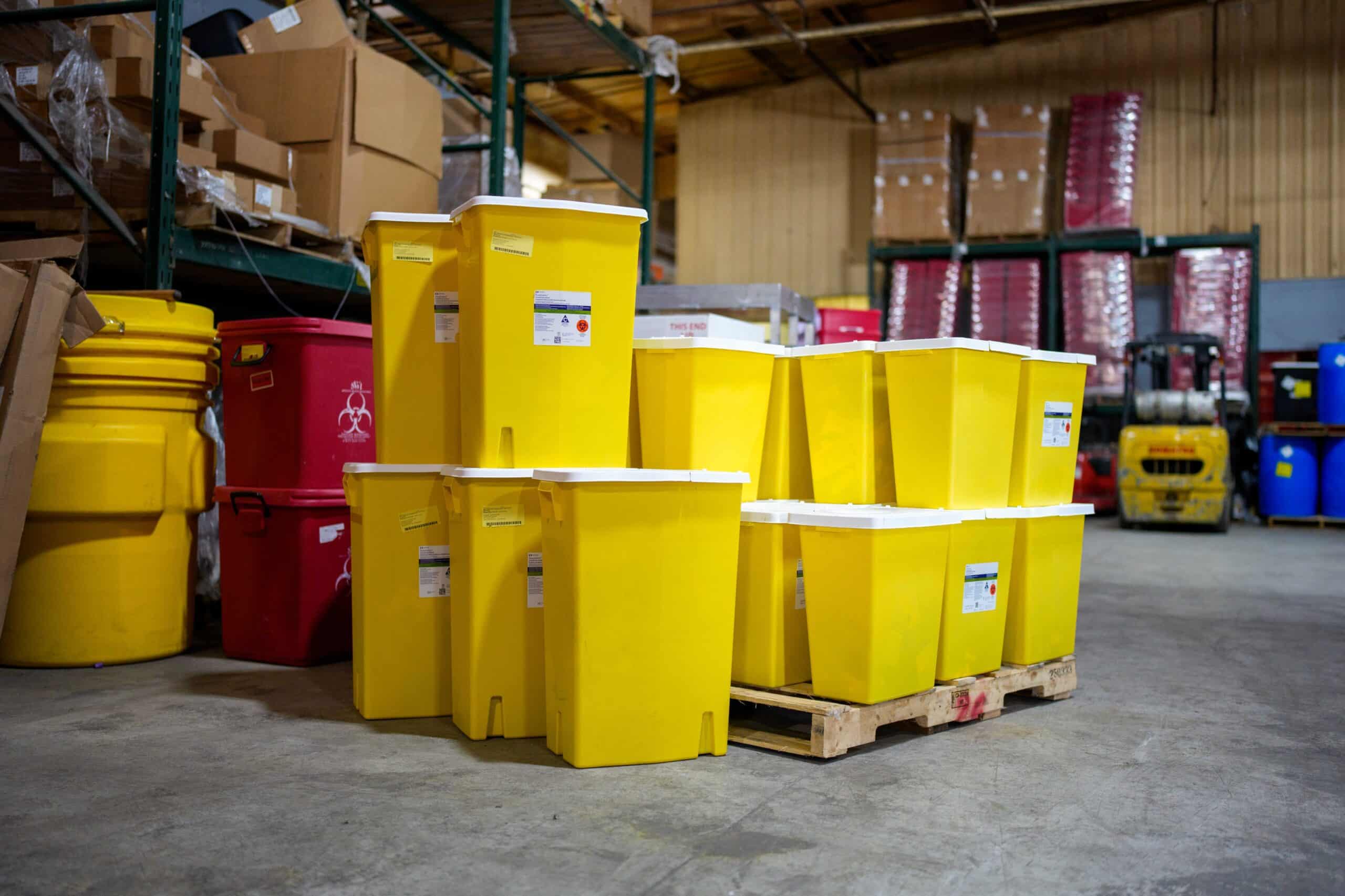
Medical waste disposal in Virginia begins long before a truck arrives for pickup. The process starts inside the facility, where staff decide what belongs in a red bag, what belongs in a sharps container, and what needs to be kept in a separate waste stream. Under Virginia’s regulated medical waste rules, those first decisions affect everything that follows: packaging, storage, transportation, treatment, documentation, and final disposal.
Whether your business is a healthcare practice or a tattoo studio, you must follow these rules to the letter, and the easiest way to do so is to set up a clear, straightforward in-house process. The right containers need to be close to the work area, pickup frequency has to match volume, and records should be easy to retrieve at all times.
What Counts as Regulated Medical Waste in Virginia
Virginia regulates medical waste as a subset of solid waste that has a risk of creating infectious disease concerns if mishandled. In a facility, regulated medical waste may include:
- Human blood and body fluids
- Cultures and stocks
- Human anatomical waste
- Contaminated sharps
- Certain infected animal waste
- Spill cleanup residue
- Solid waste that has been mixed with regulated medical waste
However, the definition isn’t restricted to just these items. If a healthcare professional determines that a waste stream can transmit an infectious disease, a business should handle the waste appropriately. This is especially true when sharps are involved, as they create both infection and puncture risks.
Waste That Should Be Separated from Medical Waste
Regulated medical waste disposal works best when there is a clearly defined waste stream. Chemical waste, hazardous waste, pharmaceutical waste, chemotherapy waste, and ordinary trash all have different handling rules, so they should be separated before the waste ever reaches a pickup area. If kept together, it can lead to treatment issues, rejected containers, gaps in documentation, and even legal or financial penalties. Facilities should use clear color-coding to help facilities keep waste categories organized and stay compliant with the law.
Medical waste should be separated into:
- Red containers for medical waste
- Yellow containers for chemotherapy waste
- Black containers for hazardous waste
- Blue containers for pharmaceutical waste
These systems help your staff make the correct choice when waste is generated, which is usually the moment when mistakes are easiest to prevent. Then, a regulated medical waste disposal facility can properly treat the waste.
Step 1: How Medical Waste Is Collected at the Point of Generation
Medical waste presents the highest disease-causing potential near the point of generation. The first few minutes of handling matter, so collection starts where the waste is created. Staff should be able to reach the right container without walking across the facility or guessing which waste stream applies.
Red bag waste should stay separate from sharps, pharmaceutical waste, chemotherapy waste, hazardous chemical waste, and ordinary trash. For day-to-day staff, the process should be simple enough to follow under time pressure. Facilities with employees who may be exposed to blood or other potentially infectious materials also need to follow the Occupational Safety and Health Administration Bloodborne Pathogens Standard.
This addresses:
- Exposure control planning
- Engineering controls
- Work practice controls
- Personal protective equipment
- Hazard communication
- Recordkeeping
Medical waste collection should be supported by training, accessible containers, and procedures that staff can repeat the same way each time. By following these standards, businesses can maintain their compliance with the law and keep both their employees and the general public safe.
Step 2: How Medical Waste Is Packaged and Labeled for Pickup
Overweight boxes, unsealed bags, loose sharps, liquids, mixed waste, and missing labels can all create problems before a transporter ever accepts the waste. A clean packaging process helps prevent service delays and reduces exposure risk to harmful contaminants.
Regulated medical waste must be placed into a red biohazard bag, sealed, and then placed into a Department of Transportation-approved container for pickup. Sharps should already be sealed in compliant sharps containers before entering the regulated medical waste box. Liquids, however, need special care, because leaking packaging can create handling concerns for staff, drivers, and receiving facilities.
You also need to create labels and documents to support the chain of custody. They help identify the generator, waste type, packaging date, and handling requirements. The details may seem routine, but they give the facility and the provider a shared record of what was removed, when it was removed, and where it was sent.
Step 3: How Medical Waste Is Stored Before Transport
Storage sits between internal collection and off-site transportation. During that time, packaging integrity, access control, cleanliness, labeling, and waste separation all matter. A storage area should protect containers from damage, limit access to trained personnel, and keep different types of waste apart.
Virginia has specific rules regarding the storage and removal timeframes for regulated medical waste. Businesses generating less than 250 gallons per calendar month are required to arrange removal at least once per month, with no medical waste stored onsite for more than 45 calendar days and no more than 250 gallons stored onsite at any one time. Generators at 250 gallons or more per calendar month are generally required to arrange removal at least once per calendar week, with no regulated medical waste stored onsite for more than 10 calendar days.
Step 4: How Medical Waste Is Transported in Virginia
Generators are expected to arrange shipment to a facility permitted to receive regulated medical waste. That involves safely moving regulated medical waste from the generator to a permitted facility for transfer, treatment, or disposal. Businesses and facilities must maintain pickup records, manifests, tracking forms, and related documents to show that the waste left the facility and moved through the proper channel, and store all records safely and securely. The waste must also be labeled under UN3291, the shipping name for regulated medical waste.
Service reliability matters here. A regional provider familiar with Virginia’s medical waste regulations, like us at Specific Waste Industries, can help your facility maintain consistent pickup, transparent pricing, and a compliance-focused program.
Step 5: How Medical Waste Is Treated Before Final Disposal
Treatment comes before final disposal. The purpose is to reduce the risk of infection so that the treated material can be managed appropriately. Virginia’s Department of Environmental Quality regulates that medical waste must be treated at permitted facilities before disposal, unless a specific rule or exemption applies.
These treatment methods can include, but are not limited to:
- Autoclaving
- Sterilization with high-heat steam treatment
- Thermal treatment
- Chemical-mechanical systems
Facilities choose a treatment method based on the waste in question, their permit, validation requirements, and applicable state and federal rules. They must follow requirements for operations, treatment validation, recordkeeping, reporting, and closure, so having a close relationship with your waste treatment provider is essential. Your business needs confidence that waste is being sent into a process built for regulated medical waste, not treated as an ordinary trash problem.
Step 6: How Treated Waste Is Finally Disposed Of
Final disposal follows treatment. Once treated, it’s no longer classified as regulated medical waste and can be managed as solid waste if the receiving facility’s permit allows acceptance. Untreated regulated medical waste cannot be placed in regular trash, and it’s entirely excluded from reuse, recycling, or disposal at landfills or any other solid waste management facility.
Collection, transportation, treatment, and recordkeeping need to work as a single, integrated process, with the final disposal closing the documentation loop. All steps must be documented, and the records must be retained for at least three years.
Virginia Medical Waste Compliance Responsibilities by Role
The medical waste lifecycle works better when each party involved understands their role. The generator handles classification, segregation, internal collection, storage, and records. The provider or transporter supports the program through containers, pickup frequency, transportation, treatment, and documentation of disposal.
| Stage | Facility Responsibility | Provider or Transporter Responsibility | Main Compliance Focus |
| Waste generation | Identify the waste stream and separate it from ordinary trash. | Provide guidance and appropriate containers when contracted. | Correct classification |
| Internal collection | Place waste in the right bag, sharps container, or container type. | Support container and program setup. | Staff safety and segregation |
| Packaging and labeling | Seal, label, and prepare waste for pickup. | Verify that waste is ready for transport. | DOT-ready handling |
| Storage | Keep waste secure until pickup. | Maintain the agreed pickup frequency. | Exposure control |
| Transportation | Release waste with proper documentation. | Transport waste under applicable rules. | Chain of custody |
| Treatment | Send waste to an approved receiving facility. | Treat waste through a permitted process. | Pathogen reduction |
| Final disposal | Keep records as required for three years or more. | Complete disposal documentation. | Compliance proof |
Common Mistakes Virginia Facilities Should Avoid
A medical waste program can look compliant on paper, but still break down during daily work. Most mistakes happen because containers are missing, staff have not been trained recently, or waste streams are being combined for convenience.
| Common Mistakes | Compliance Concern | How to Correct the Problem |
| Putting untreated regulated medical waste in regular trash | Virginia’s DEQ prohibits placing untreated regulated medical waste and its packaging in regular trash, reuse streams, recycling streams, or solid waste landfills. | Keep regulated waste in the correct container and send it through a qualified disposal program. |
| Mixing chemical waste with red bag waste | Chemical waste and regulated medical waste follow different rules, so mixing them can create handling and disposal problems. | Separate waste streams at the point of generation and use the correct container color. |
| Leaving sharps loose in red bags | Loose sharps create puncture risks for staff, transporters, and anyone handling the packaging. | Place sharps in compliant sharps containers before they enter the regulated medical waste stream. |
| Using the wrong container color | Red, yellow, black, and blue containers communicate different waste streams. Using the wrong color causes confusion during handling. | Use red for medical waste, yellow for chemotherapy waste, black for hazardous waste, and blue for pharmaceutical waste. |
| Waiting too long to schedule pickup | Storage timeframes and facility volume should shape the pickup program. | Choose a pickup frequency that matches waste volume and facility workflow. |
| Letting staff training lapse | OSHA requires employers with occupational exposure to address exposure control, hazard communication, and recordkeeping. | Train staff on proper waste segregation, PPE, sharps handling, and full-container procedures. |
What to Look for in a Virginia Medical Waste Disposal Provider
A Virginia provider should understand industry-specific requirements. Regulations change over the years, and current compliance knowledge matters when a provider helps set up a program, prepares waste for transport, and maintains records. Ideally, your waste disposal partner should help with compliance support, OSHA compliance training, and staff support to keep your facility safe and organized.
Don’t forget to consider pricing, straightforward invoicing, easy-to-understand service terms, and no hidden fees. At Specific Waste Industries, we treat our own waste, which gives us more control over the disposal process. This also helps customers avoid unnecessary complexity.
Finally, make sure that you think about pickup frequency. We support daily, weekly, bi-weekly, monthly, bi-monthly, quarterly, annually, and one-time pickup frequency options. That range lets facilities match service to volume and avoid a mismatched schedule for their waste stream.
Find Your Virginia Medical Waste Disposal Provider Today
If your Virginia facility needs a medical waste removal program that keeps collection, transportation, treatment, records, and staff routines organized, Specific Waste Industries is your go-to service provider. We have the experience needed to keep your facility safe and compliant, with a range of pickup frequencies and service plans to meet your needs. Get in touch with our team today, and learn about how we can help your facility.