





Medical waste disposal in Clarksville, IN, requires a service partner that understands local healthcare operations and the regulatory expectations tied to Clark County facilities. Specific Waste Industries provides regulated medical waste disposal, medical waste pickup, sharps disposal, chemotherapy waste disposal, pharmaceutical waste removal, and pathological waste services for healthcare providers that need compliant handling.
After more than 45 years in medical waste management, SWI supports hospitals, clinics, dental offices, laboratories, long-term care facilities, veterinary practices, and specialty providers with safe transportation and practical service planning. As a regionally owned provider with a nearby presence in Jeffersonville, Indiana, SWI offers direct communication, transparent pricing, and service programs sized to accommodate a facility’s specific waste volume.
SWI’s Medical Waste Removal Services in Clarksville, IN
Medical waste programs work best when pickup frequency matches the facility’s actual waste volume. SWI provides one-time pickups, along with scheduled medical waste removal for daily, weekly, bi-weekly, monthly, bi-monthly, quarterly, annual, and as-needed service requirements. Programs can be adjusted as waste volume, service categories, or compliance needs change.
Pathological Waste Disposal
Pathological waste may include human tissues, organs, body parts, and related materials generated during diagnosis, treatment, surgery, or research. In Indiana, infectious waste can include pathological waste, contaminated sharps, liquid or semiliquid blood and blood products, biological cultures, and certain laboratory animal materials when the waste is capable of transmitting a dangerous communicable disease. While all pathological waste is included under infectious waste, infectious waste can be subcategorized into other waste streams, such as red-bag or sharps disposal, for clarity and separate handling practices.
SWI manages pathological waste through compliant collection, secure transportation, and approved treatment or disposal procedures. Hospitals, laboratories, surgical centers, and specialty clinics in the Clarksville area often generate this waste stream during procedures or specimen handling. Proper separation matters because it reduces unnecessary handling risks and supports the documentation that facilities use for internal compliance programs.
Chemotherapy Waste Disposal
Trace chemotherapy waste can come from oncology practices, infusion centers, hospitals, and outpatient treatment facilities. Items that contact chemotherapy agents require careful separation into the correct chemotherapy waste stream, separate from red-bag medical waste and other regulated materials.
SWI’s color-coding guidance places chemotherapy waste in yellow containers. When appropriate, chemotherapy waste is treated using high heat via approved methods. For Clarksville providers, that separation can make daily handling clearer for staff and reduce the chance that incompatible waste streams end up in the same container.
Pharmaceutical Waste Removal
Pharmaceutical waste includes expired, unused, or contaminated medications that are either classified as being non-hazardous, hazardous, or controlled substances. Each category may require different handling, so pharmaceutical waste is classified into a separate stream from general regulated medical waste.
SWI’s blue container guidance helps Clarksville clinics, long-term care facilities, pharmacies, veterinary practices, and hospitals keep pharmaceutical waste separate from red-bag waste. A consistent pickup program is useful for pharmaceutical waste because it keeps disposal from becoming a storage issue and provides staff with a predictable routine.
Sharps Waste Disposal
OSHA describes sharps as all objects that can penetrate a worker’s skin, including needles, scalpels, broken glass, capillary tubes, and exposed ends of dental wires. If blood or other potentially infectious materials are present or may be present, it is categorized as an infected sharp and so requires appropriate personal protective equipment (PPE) to be worn.
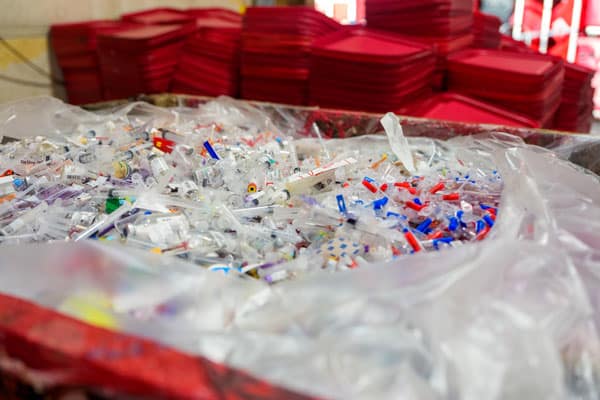
Containment and timely pickup are key parts of worker safety. OSHA states that sharps containers must be puncture-resistant, leakproof on the sides and bottom, labeled or color-coded red, closable, kept upright, and replaced routinely before overfilling creates added risk. SWI provides regulated sharps pickup for Clarksville facilities, and OSHA recommends changing containers when they are 3/4 full. For remote sites, acupuncture providers, tattoo parlors, and nationwide service needs, SWI’s sharps mail-back option may be used as a secondary solution for needles and other sharps.
Red-Bag Medical Waste
Red-bag medical waste, also called regulated medical waste or biohazardous waste, may include blood-contaminated materials, disposable medical supplies, and other potentially infectious materials that require compliant packaging and disposal. This waste stream is common in healthcare facilities, dental offices, dialysis centers, laboratories, and veterinary clinics around Clarksville.
SWI’s color-coding guidance uses red containers for medical waste. Clear separation helps staff avoid mixing red-bag waste with chemotherapy, pharmaceutical, or hazardous waste streams. It also makes pickup more orderly because each container is tied to its correct waste category before transportation.
Medical Waste Disposal Requirements for Clarksville Healthcare Facilities
Medical waste generated in Indiana may be subject to state and federal requirements depending on the waste type, the generator, the packaging, and the transportation method. Indiana defines medical waste as solid waste generated in the diagnosis, treatment, or immunization of human beings or animals, in related research, or in the production or testing of biologicals, excluding listed hazardous waste and household waste.
Indiana’s infectious waste rules separately define infectious waste as waste that observable evidence indicates is capable of transmitting a dangerous communicable disease, with listed categories that include contaminated sharps, pathological waste, certain blood and blood products, infectious cultures, and waste intermingled with infectious waste.
SWI helps facilities manage waste streams according to OSHA, EPA, DOT, and applicable Indiana requirements. This support includes operational guidance and service planning, and facility counsel or regulators should be consulted for legal interpretations.
OSHA, EPA, DOT, and Indiana Compliance
Different agency regulations may apply to different parts of a medical waste program. OSHA is tied to worker safety and occupational exposure to blood or other potentially infectious materials. DOT requirements apply during regulated medical waste transportation, including packaging requirements under 49 CFR 173.197.
Indiana rules also address containment, labeling, treatment, transportation, and disposal responsibilities for generators and service providers. IDEM states that waste generators and those who provide services to generators are responsible for proper containment, labeling, effective treatment, transport, and disposal of infectious waste. SWI’s role is to help Clarksville facilities maintain a compliance-focused service program with trained professionals and clear waste-stream separation.
Proper Separation and Color-Coded Containers
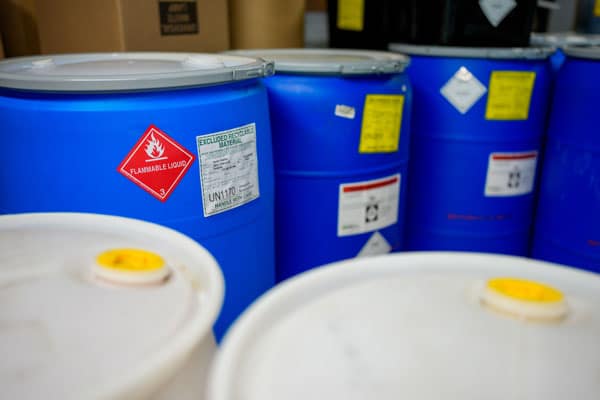
Container color is a simple operational cue that can prevent bigger problems. SWI’s approved color-coding guidance uses red containers for medical waste, yellow containers for chemotherapy waste, blue containers for pharmaceutical waste, and black containers for hazardous waste.
| Container Color | Waste Stream | Practical Use for Clarksville Facilities |
| Red | Medical waste | Blood-contaminated materials, red-bag waste, and other regulated medical waste |
| Yellow | Chemotherapy waste | Trace chemotherapy waste from oncology, infusion, and treatment settings |
| Blue | Pharmaceutical waste | Expired, unused, or unusable medications that require separate handling |
| Black | Hazardous waste | Waste that must be evaluated and managed in the correct hazardous waste stream |
Correct separation reduces the risk of contamination and helps prevent incompatible waste streams from being mixed. It also gives staff a consistent way to identify where waste belongs before it is sealed, stored, and collected.
Documentation and Pickup Records
Service documentation can support internal compliance programs, audits, inspections, staff accountability, and vendor management. The exact records a facility maintains may vary by waste stream and operation, so the program should be built around the facility’s actual needs.
Predictable pickup frequency can also reduce overfilled containers and storage concerns. This is especially helpful for facilities that see changes in patient volume, procedure schedules, or medication usage over time.
Staff Safety and Exposure Reduction
Sharps, blood-contaminated materials, and regulated waste handling all connect to employee exposure risk. OSHA’s bloodborne pathogens information stresses prompt disposal of contaminated sharps in accessible sharps disposal containers, along with safe handling practices that reduce needlesticks and cuts.
A medical waste program should support employee training, proper container use, safe storage, and secure pickup. SWI’s trained professionals provide Clarksville facilities with a service partner for regulated collection and transportation, thereby reducing confusion for staff who already have patient care responsibilities.
How Our Medical Waste Disposal Process Works
SWI keeps the process straightforward for Clarksville facilities. The goal is to create a pickup plan that fits the facility’s waste volume, waste type, and compliance needs with only the services the facility requires.
Step 1: Consultation and Waste Assessment
SWI starts by learning which waste streams your facility generates. That may include sharps, red-bag medical waste, pharmaceutical waste, chemotherapy waste, pathological waste, or hazardous waste that needs separate evaluation.
The assessment accounts for waste volume, current pickup frequency, container needs, and compliance concerns. Some facilities need a one-time pickup after a cleanout or backlog, while others need a recurring schedule because regulated waste is generated every week.
Step 2: Service Plan and Pickup Frequency
SWI builds the service plan around the frequency the client chooses. Available options include daily, weekly, bi-weekly, monthly, bi-monthly, quarterly, annual, one-time, and as-needed service.
A practical schedule can help prevent overfilled containers and reduce unnecessary pickups. Clients choose the pickup frequency, while SWI coordinates service through the appropriate routing and operational processes.
Step 3: Collection and Transportation
Trained SWI staff collect properly packaged waste and transport it in accordance with applicable requirements. Safe transportation is a meaningful benefit for Clarksville healthcare facilities because medical waste must move from the point of generation to treatment and disposal through controlled handling and clear service communication.
DOT rules address regulated medical waste transportation packaging, including rigid containers, UN standard packaging requirements for certain non-bulk packaging, and puncture-resistant sharps containers that are securely closed. SWI’s collection process is built around secure handling, chain-of-custody awareness, and reliable service communication.
Step 4: Treatment, Disposal, and Ongoing Support
After pickup, medical waste is treated with high heat when appropriate and disposed of through compliant methods. SWI’s in-house treatment capability helps control service costs and supports transparent, competitive pricing by reducing reliance on unnecessary third-party treatment steps.
Service needs can change. If a Clarksville facility adds a new service line, changes patient volume, or starts generating a different regulated waste stream, SWI can adjust pickup frequency and service planning to match the new waste profile.
Why Choose SWI for Medical Waste Disposal in Clarksville, IN
Clarksville healthcare providers need consistent pickup, clear communication, and compliant handling. SWI’s service model is built for facilities that want professional waste management with ambiguity-free communication and more practical support than rigid national programs often provide.
45+ Years of Experience
SWI brings more than 45 years of medical waste management experience to facilities in Clarksville and across Indiana. That experience is useful when a facility handles more than one regulated waste stream, as pickup planning, container guidance, transportation, and treatment expectations can vary by category.
A clinic with sharps and pharmaceutical waste has a different service profile than a surgical center with red-bag waste and pathological materials. SWI understands those differences and builds programs around the waste being generated.
Trained Waste Management Professionals
SWI’s trained staff understand regulated medical waste, sharps waste, pharmaceutical waste, chemotherapy waste, pathological waste, and hazardous waste evaluation. Training supports safer collection, clearer communication, and better compliance support for facility teams.
For staff in medical offices or treatment settings, waste handling should be predictable. SWI helps keep the pickup process clear so employees know how each waste stream should be prepared before collection.
Transparent, Competitive Pricing
SWI provides straightforward invoicing with no hidden fees. Pricing is based on service requirements such as waste type, volume, pickup frequency, and container needs.
In-house treatment also helps SWI control costs. Because waste can be managed through SWI’s own treatment capability, the service program avoids unnecessary third-party treatment steps that can add cost and complexity.
Safe Transportation and Compliant Handling
Regulated medical waste must be collected, transported, and treated through reliable procedures. SWI uses DOT-aware transportation practices and secure handling procedures to help Clarksville facilities keep waste moving through the proper process.
This matters most when waste leaves the facility. The transition from storage to pickup to transportation is where clear procedures and trained personnel make the service easier to manage.
Regional Service With Local Accountability
SWI is regionally owned and operated with a Jeffersonville, Indiana, presence near Clarksville. For healthcare providers in southern Indiana, that regional structure can make communication more direct and service plans more practical.
Large national providers often use broader service models. SWI’s regional approach gives Clarksville facilities a partner that understands Indiana service areas, nearby Clark County communities, and the needs of local healthcare operations.
Who We Serve in Clarksville and Clark County
SWI serves a wide range of medical, dental, diagnostic, long-term care, veterinary, and specialty facilities in Clarksville and nearby Clark County. The service plan depends on the waste stream and the facility’s volume.
| Facility Type | Common Service Needs |
| Hospitals and urgent care centers | Higher-volume regulated medical waste, sharps waste, and red-bag waste pickup |
| Dental and oral surgery offices | Sharps waste, blood-contaminated materials, and pharmaceutical waste removal |
| Veterinary clinics | Waste generated through treatment, immunization, and animal care activities, which can fall within Indiana’s medical waste definition |
| Laboratories and diagnostic centers | Specimen-related materials, pathological waste, and regulated waste streams |
| Long-term care and nursing facilities | Routine pickup, pharmaceutical waste, sharps disposal, and staff safety support |
| Tattoo parlors and acupuncture clinics | Sharps pickup or mail-back sharps options where appropriate |
Areas Near Clarksville, IN, that We Serve
Along with Clarksville, SWI serves nearby communities across southern Indiana where service coverage applies. This may include Jeffersonville, New Albany, Sellersburg, Charlestown, Floyds Knobs, Clark County, and the Louisville metro area.
The local advantage is practical. Facilities near Clarksville can work with a regionally owned provider that understands Indiana requirements and provides service options for nearby healthcare markets.
Contact SWI for Medical Waste Disposal in Clarksville, IN
For medical waste disposal in Clarksville, IN, Specific Waste Industries provides one-time pickup and recurring service options for regulated medical waste, sharps waste, pharmaceutical waste, chemotherapy waste, and pathological waste. Clarksville facilities work with trained professionals, offer transparent pricing, and provide compliance-focused handling, from pickup planning to treatment and disposal.
Request a quote or call SWI at (877) 425-2770 to build a service plan that fits your facility’s waste volume and pickup frequency.
Frequently Asked Questions
Some medical waste is regulated because it may contain blood, other potentially infectious materials, sharps, pathological materials, pharmaceutical waste, or chemotherapy waste. Indiana’s medical waste definition excludes listed hazardous waste and household waste. In contrast, the state’s definition of infectious waste focuses on waste capable of transmitting a dangerous communicable disease. It includes specific categories such as contaminated sharps, pathological waste, certain blood and blood products, infectious cultures, and intermingled waste.
Medical waste streams are classified in different ways under applicable rules. Facilities should work with a compliant provider to identify the correct waste stream before storage, pickup, or transportation.
Medical waste removal pricing in Clarksville depends on waste type, volume, pickup frequency, container needs, and service requirements. A facility that generates sharps and red-bag waste each week will need a different service plan than a site that needs a one-time pharmaceutical waste pickup.
SWI provides transparent pricing, straightforward invoicing, and no hidden fees. The best way to confirm cost is to request a quote based on the facility’s actual waste profile.
Medical waste programs may involve OSHA worker-safety requirements, EPA-related waste management considerations, DOT transportation rules, and Indiana requirements. OSHA’s bloodborne pathogens standard covers occupational exposure to blood and other potentially infectious materials, and OSHA’s sharps guidance addresses container accessibility, puncture resistance, leak resistance, labeling, closure, upright storage, and routine replacement.
Because requirements can vary by waste stream, facilities should maintain a compliant waste program with a qualified provider. SWI helps Clarksville facilities organize pickup, transportation, and waste-stream handling while adhering to applicable requirements.
Pickup frequency depends on waste volume, container fill levels, facility type, and internal compliance procedures. SWI offers daily, weekly, bi-weekly, monthly, bi-monthly, quarterly, annual, one-time, and as-needed services.
Sharps containers should be changed when they are 3/4 full under SWI’s OSHA-based handling guidance. For other regulated waste streams, a consistent pickup schedule can reduce overfilled containers and help staff manage storage more predictably.
SWI handles regulated medical waste, red-bag waste, sharps waste, pathological waste, chemotherapy waste, and pharmaceutical waste for Clarksville facilities. Hazardous waste should be evaluated separately so it can be placed in the correct waste stream.
The service plan can be built around one waste category or multiple categories. During assessment, SWI reviews the facility’s waste profile and pickup frequency needs.
SWI offers one-time service, as well as scheduled pickup programs in Clarksville. One-time pickup may work best for cleanouts, temporary projects, backlog removal, or facilities changing providers.
Recurring service may be better for facilities that generate regulated medical waste daily or weekly. Requesting a quote provides SWI with the information needed to recommend the right service frequency.