

In Virginia, waste generated by local healthcare facilities must be managed in accordance with state and federal regulations. With public and environmental health at stake, compliance is crucial. Virginia’s medical waste regulations were designed to minimize any potential negative impacts to protect workers, the general public, and the environment alike. For any organization generating regulated medical waste (RMW), understanding the regulations is key to implementing safer waste management practices and avoiding costly penalties.
Who Regulates Medical Waste in Virginia?
Regulation of medical waste in Virginia is primarily managed by the Virginia Department of Environmental Quality (DEQ), as outlined in the Regulated Medical Waste Management Regulations. Several other bodies also contribute to the regulation, including:
- The Virginia Department of Health (VDH), which oversees public health related to healthcare facilities and infection control.
- The U.S. Environmental Protection Agency (EPA), for matters related to environmental protection standards.
- The Occupational Safety and Health Administration (OSHA), who dictates worker safety requirements for facilities handling medical waste.
Each of these bodies plays a role in regulating medical waste in Virginia.
What Is Considered Medical Waste?
Virginia law classifies medical waste as any waste that may reasonably be thought to carry pathogens capable of causing infection in humans. Medical waste includes human blood or body fluids, tissues and organs, discarded cultures, contaminated sharps capable of puncturing skin, and more.
However, not all healthcare-related waste falls under RMW. Materials that pose no threat of infection don’t count as regulated medical waste. Under Virginia law, any waste that falls under RMW requires special handling, packaging, labeling, storage, and transport controls.
Virginia Medical Waste Regulations
The DEQ lays out its requirements for medical waste control in the Regulated Medical Waste Management Regulations. Here, healthcare facilities are instructed on the proper method of identifying, packaging, storing, transporting, treating, and documenting medical waste. What’s at stake is the health and safety of the public, the workforce, and the environment, all of whom require protection against infectious materials.
Any facility in Virginia that handles medical waste is legally obligated to meet DEQ requirements from the moment of waste generation through its final treatment or disposal. Those requirements cover everything from segregation and storage to transportation and recordkeeping.
Segregation Requirements
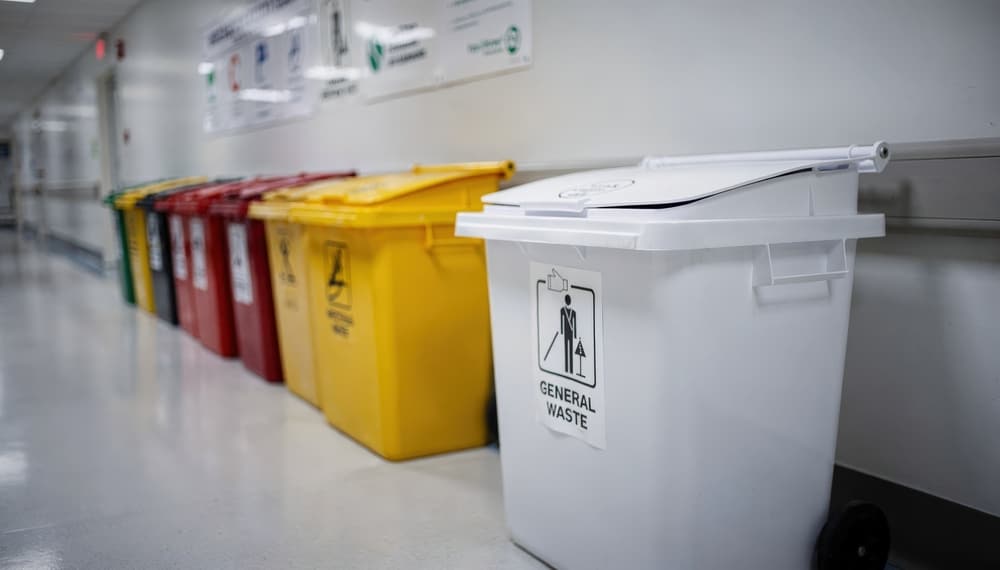
Virginia’s segregation requirements dictate the proper ways in which medical waste must be identified, separated, and contained. Medical waste must be separated from regular solid waste immediately and placed in containers specifically designed to hold infectious materials. Sharps must be placed in puncture-resistant containers, while other forms of medical waste are placed in color-coded bags or containers.
To help prevent exposure to infectious waste, all containers and bags must be fully leak-resistant. Once in bags or containers, the waste must be clearly labeled as regulated medical waste. Properly segregating waste in this way is an important step towards preventing accidental exposure to dangerous materials.
Storage Requirements
In Virginia, regulated medical waste must be stored in a way that protects workers, the public, and the environment. So, the integrity of the waste packaging must be maintained at all times. It must be kept in sealed, properly labeled containers that prevent spills, leaks, or damage, and these must remain upright and stable during storage. Access should be restricted to authorized personnel only.
If waste is stored on-site, there are time limits on how long it can remain before removal. The limits are 45 days for less than 250 gallons of waste and 10 days for any higher volumes. If waste is transferred off-site, the off-site transfer station or treatment facility that holds it is subject to additional time limits.
Transport Requirements
The transportation of regulated medical waste should occur only when carried by licensed and authorized carriers. Transportation must be conducted in a way that prevents spills, exposure, and contamination, while remaining fully documented at all times. The waste must be placed in properly sealed and labeled containers and be transported alongside a manifest that identifies the generator, transporter, and receiving facility. Without this documentation, healthcare facilities will be unable to demonstrate compliance and could be penalized.
Treatment and Disposal Requirements
Virginia’s DEQ demands that medical waste be properly treated before it can be disposed of or recycled. Waste must be rendered noninfectious, with no threat whatsoever to public health or the environment, because it otherwise cannot be placed in a landfill or regular waste disposal facility. The DEQ approves methods such as autoclaving, high-heat treatment, and chemical disinfection. Once the waste has been treated using an approved method, it can be sent to a landfill.
Recordkeeping and Documentation
Healthcare facilities must demonstrate compliance with medical waste regulations. That means that they must document how they handle, store, and dispose of the waste. This typically includes shipment records, manifests, tracking documents, and pickup logs, so relevant authorities can verify how the waste reached the treatment site.
Facilities also need to keep a record of how long waste is stored on site and when it was removed. Together, these steps demonstrate their compliance with all applicable regulations and help inspectors trace the waste’s path from generation to final disposal.
OSHA Requirements for Virginia Healthcare Facilities
In Virginia, healthcare facilities must follow federal worker safety rules enforced by the Occupational Safety and Health Administration (OSHA). This includes meeting OSHA’s Bloodborne Pathogens Standard, which requires employers to protect workers from exposure to potentially infectious materials.
To meet these requirements, facilities must provide employee training and conduct regular workplace inspections. The facility is responsible for identifying hazards and maintaining injury and exposure logs. They also need to provide personal protective equipment and set up controlled areas for medical waste disposal. In Virginia, any worker who handles medical waste as part of their daily duties is entitled to these protections.
Penalties for Medical Waste Regulation Violations
Any facility that fails to comply with medical waste regulations is subject to penalties, including warnings, corrective action orders, and administrative fines. These enforcement actions include fines of up to $32,500 per day for each violation. Where repeated violations are discovered, DEQ also reserves the right to suspend facility operations.
In severe cases, such as willful misconduct, criminal penalties can be enforced. On top of that, any facility found in violation will face a higher level of scrutiny from the authorities. This means increased inspections and oversight, and can even permanently damage your company’s reputation and trust.
The Environmental Impact of Medical Waste in Virginia
Virginia’s medical waste management regulations are designed to protect the public, healthcare workers, and the environment from infectious materials. They do this by reducing the risk of contamination to soil and water and preventing the transmission of infectious disease. That’s why regulations for any facility handling medical waste are so strict; each facility is responsible for handling, packaging, and transporting it. It’s how they contribute to a safer and healthier environment.
How Professional Medical Waste Disposal Services Help You Stay Compliant
A professional waste disposal service manages the collection, transportation, treatment, and documentation of your medical waste. Companies like ours at Specific Waste Industries take care of each aspect of the waste cycle, from segregation, packaging, and labeling to transport and treatment, and always stay aligned with state and federal regulations.
Our services free you and your staff from the constant struggle of attempting to meet compliance requirements. We support you every step of the way, from inspections to maintaining manifests, tracking documents, and pickup records. This service streamlines your waste management and lets you stay focused on patient care.
Summary
Virginia’s Regulated Medical Waste Management Regulations protect the public and the environment, and healthcare facilities of any type must align with these rules. However, you don’t have to do everything alone—our team at Specific Waste Industries is committed to maintaining compliance. We can help you safely manage medical waste and maintain regulatory compliance with our targeted support. Call us today to learn more about how we can help.