




Healthcare and other professional facilities in Bowling Green partner with Specific Waste Industries (SWI) for sharps disposal that fits real-world operations. Your program can include sharps containers, a pickup frequency matched to your workflow, secure transportation, high-heat treatment, and help organizing the documentation tied to your plan. To review options, call 877-425-2770 or visit the Request a Quote page.
Kentucky doesn’t manage medical waste through a single authority. Oversight spans environmental protection, public health, worker safety, and transportation rules, so a clear, well-documented process helps administrators maintain compliance across programs.
Sharps Disposal in Bowling Green, KY for Commercial Facilities
A dependable sharps disposal program protects your staff, patients, and waste handlers while giving your facility a clear process to follow. SWI builds commercial service plans around the way Bowling Green organizations generate and manage sharps.
Loose or mishandled needles endanger employees, patients, housekeeping staff, waste haulers, and the public. Guidance from the U.S. Environmental Protection Agency (EPA) notes the risk of needlestick injuries and infection when discarded sharps puncture bags or reach garbage and recycling systems. A commercial sharps program gives your team a defined method for collecting, containing, transporting, and documenting this waste stream.
Kentucky’s approach extends beyond final disposal. State guidance addresses characterization, treatment, handling, labeling, storage, transportation, and end-of-life steps, with responsibilities shared across environmental, public health, labor, and transportation agencies. SWI helps facilities coordinate these moving parts with a plan aligned to what you generate and how your teams work.
What counts as sharps waste?
Sharps are objects with points or edges that can puncture or cut skin. In healthcare and related settings, this includes needles, syringes, lancets, auto-injectors, infusion sets, connection or cap needles, scalpel blades, and razor blades used in patient care. U.S. Food and Drug Administration (FDA) guidance lists needles, syringes, lancets, auto-injectors, infusion sets, and connection needles among items intended for healthcare sharps containers. The Occupational Safety and Health Administration (OSHA) defines contaminated sharps as contaminated objects capable of penetrating the skin, including needles and scalpels.
This page focuses on sharps generated by professional facilities and organizations. If your operation also produces pharmaceutical, chemotherapy, pathological, or other regulated waste streams, ask SWI about the appropriate separate services. Chemotherapy waste is treated with high heat and managed under its own program.
Facilities that generate sharps
Suitable generators include hospitals, clinics, physician offices, dental practices, veterinary clinics, laboratories, research facilities, nursing homes, long-term care providers, tattoo parlors, acupuncture practices, medical spas, infusion centers, and similar organizations. The best plan depends on which sharps you generate, how many service locations you have, and the volume produced at each site.
What Specific Waste Industries provides
SWI helps you select appropriate sharps disposal containers and a service arrangement that supports safe collection and predictable change-outs. Clients choose a daily, weekly, biweekly, monthly, bimonthly, quarterly, annually, or one-time pickup frequency based on their operational needs.
After containers are sealed, SWI collects and transports them through a controlled medical-waste process. SWI treats its own waste and helps facilities organize the records and compliance details associated with their plan. The goal is a practical program that fits your workflow rather than a rigid schedule designed for a different generator type.
To size containers and set a pickup cadence, request a quote at 877-425-2770 or visit the Request a Quote page.
Sharps Mail-Back Service for Smaller, Remote, or Nationwide Needs
Not every facility needs recurring on-site pickup. SWI’s sharps-only mail-back service gives smaller, remote, and multi-location organizations another practical way to manage used needles and sharps.
Some facilities don’t need recurring on-site pickup. For smaller operations, remote locations, acupuncture practices, tattoo parlors, outreach settings, or organizations with nationwide service needs, SWI offers a sharps-only mail-back option. This program is for needles and sharps only, not pharmaceutical, chemotherapy, pathological, or other hazardous or regulated waste streams.
The mail-back service uses prepaid return shipping and may include a sharps container, a prepaid return box, a manifest for proof of treatment, and tracking documentation. It works well when a location generates sharps intermittently or needs a straightforward solution for a satellite site. Because mail-back and recurring pickup serve different scenarios, SWI can compare both models and recommend the best fit.
If you need a sharps mail-back option tailored to your volume and locations, visit Sharps Mail-Back to discuss your needs with SWI.
How Sharps Disposal Service Works in Bowling Green
A well-defined process helps your team move from initial service planning to collection, transportation, treatment, and documentation without unnecessary confusion. SWI works through each stage with your facility’s waste volume and operating requirements in mind.
1. Review your facility’s needs
Identify the types and approximate volume of sharps your facility generates. Note the number of locations, where sharps are used, and whether you need recurring pickup, one-time service, mail-back, or a combination.
2. Build a service plan
SWI designs a plan around your waste volume, workflow, and selected pickup frequency. The plan can be adjusted as operations evolve, such as when a clinic adds a treatment area or a multi-site organization opens another location.
3. Arrange collection and transportation
SWI collects properly closed sharps waste and transports it through a controlled medical-waste process. Transportation is separate from treatment, and the waste is moved to the designated treatment location under your service plan.
4. Complete treatment and documentation
SWI treats its own medical waste at its onsite treatment facility and assists customers with the associated documentation. Mail-back customers receive the tracking and proof-of-treatment documentation included with that program. If you have specific record or certificate requirements, confirm them with SWI when requesting a quote.
Sharps Container Safety and Compliance Guidance
Safe sharps management begins where the waste is generated. The right containers, fill practices, and separation procedures help reduce handling risks and support the workplace requirements that apply to your facility.
Use the right container for contaminated sharps
OSHA requires contaminated reusable sharps to be placed in containers that are puncture-resistant, labeled and color-coded, and leakproof on the sides and bottom. FDA guidance describes healthcare sharps containers as rigid, puncture-resistant, leak-resistant, and equipped with a tight-fitting, puncture-resistant lid. Containers should be accessible, kept upright, and positioned as close as feasible to the area where sharps are used.
Close and replace containers before they overfill
Close and seal sharps containers at the marked fill line, generally around 3/4 full. OSHA recommends replacing containers when they reach approximately 3/4 full to reduce needlestick risk. Follow the manufacturer’s instructions, facility policy, vendor instructions, and local guidance. Never open, empty, or manually clean a full container.
Keep sharps separate from other waste streams
Don’t place needles or other sharps loose in regular trash, recycling, or a similar waste container. OSHA also generally prohibits bending, recapping, or removing contaminated needles except under limited circumstances and with a mechanical device or one-handed technique.
Follow your facility’s regulated medical-waste procedures and ask SWI how to manage additional waste streams that require separate services.
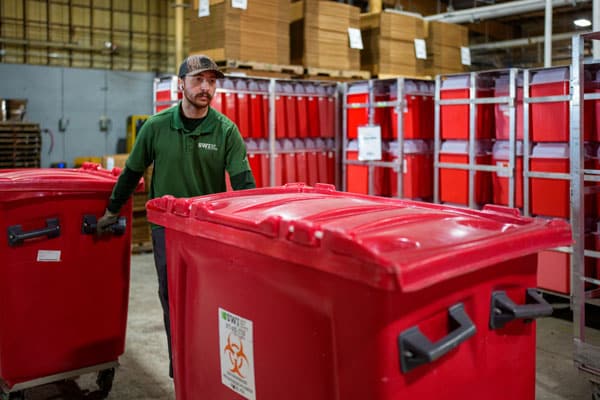
Consistent color coding supports correct sorting when it matches your facility’s procedures: red for medical waste, yellow for chemotherapy waste, black for hazardous waste, and blue for pharmaceutical waste. Keep signage and staff instructions aligned with the containers and services in use.
Why Bowling Green Facilities Choose Specific Waste Industries
Facility managers need more than a pickup vendor. They need a medical-waste partner that understands compliance, provides dependable service, and can adjust a program as operations change.
45+ years of medical-waste experience
Specific Waste Industries has more than 45 years of experience managing medical-waste streams and the compliance details that come with them. That depth of knowledge helps SWI build practical programs for hospitals, clinics, dental practices, laboratories, nursing homes, veterinary facilities, and other professional generators.
In-house treatment and experienced support
SWI treats its waste at its onsite treatment facility, rather than sending it to a third-party facility. This operational control supports a direct service relationship and makes it easier to tailor programs to each customer’s needs.
Transparent pricing with no hidden fees
SWI provides transparent pricing based on the service plan and facility requirements. Proposals account for container needs, selected pickup frequency, and scope of service, giving you a clear basis for planning. SWI does not rely on hidden fees or surprise add-ons.
Regional, personalized service
Specific Waste Industries is regionally owned and operated, with service plans tailored to individual facilities rather than a rigid national model. Bowling Green organizations can discuss volume changes, multiple locations, mail-back needs, and separate waste streams directly with a regional partner.
Call 877-425-2770 or Request a quote for transparent pricing and personalized service in Bowling Green, KY.
Frequently Asked Questions
Commercial sharps disposal is designed for facility-generated needles, syringes, and related sharps. Service plans include the selected pickup frequency, transportation, treatment, and support for service-related documentation. SWI can review your facility’s waste profile and recommend the appropriate setup.
Yes. Customers enrolled in the appropriate service can schedule SWI to collect sealed sharps containers from their facility. Contact SWI to review the number of containers, expected volume, service locations, and pickup frequency needed for your operation.
SWI offers daily, weekly, biweekly, monthly, bimonthly, quarterly, annually, and one-time pickup frequencies. The right choice depends on how much sharps waste your facility generates, how much storage capacity is available, and how your staff manages container change-outs. Your service plan determines the pickup frequency that fits your operation.
Replace a sharps container at the marked fill line, generally around 3/4 full. Follow the manufacturer’s instructions, your facility policy, vendor guidance, and local requirements. Never open, empty, or manually clean a full container. OSHA recommends changing containers at roughly 3/4 full to minimize needlestick risk.
Yes. SWI offers a mail-back option for needles and sharps only. It uses prepaid return shipping and may include tracking and proof-of-treatment documentation. The option can fit smaller or remote operations, acupuncture practices, tattoo parlors, outreach settings, or nationwide service needs. It’s not a mail-back solution for other hazardous or regulated waste streams.
Commercial facilities should never place loose used sharps in regular trash or recycling. Use an appropriate sharps container and follow the facility’s regulated medical-waste procedures. Household rules differ, so residents should consult current local guidance for home use, but generally regular trash is not appropriate for sharps disposal.
SWI provides transparent, competitive pricing based on your facility’s service needs and selected program. Container requirements, pickup frequency, number of locations, and mail-back or recurring service needs can affect the proposal. Call 877-425-2770 or request a quote for an itemized price based on your facility’s requirements.