





By Friday afternoon, the billing desk at a family practice in Latonia has a stack of explanation of benefits (EOB) statements and printed day sheets that can’t go in the trash or the recycling bin. Every page contains patient information, making document shredding in Covington, KY, a compliance task for any office that handles medical records under the Health Insurance Portability and Accountability Act (HIPAA).
Specific Waste Industries (SWI) is regionally owned and operated and has more than 45 years of experience serving healthcare facilities. Our medical document shredding program offers scheduled pickups for hospitals, physician offices, dental and veterinary practices, and other healthcare providers. Records are collected by our team and shredded until they can’t be read or reconstructed. Afterward, you get a certificate of destruction for your files. To see what a program would look like at your facility, request a quote.
Shredding Services for Covington Healthcare Facilities
Paperwork builds up at different speeds. A family practice on Madison Avenue might fill one console a month, whereas a hospital department can fill two or more in a week. That’s why SWI offers recurring and one-time medical document shredding, with each program sized to the facility using it.
Scheduled Shredding for Ongoing Patient Paperwork
Locked consoles stay in your office, and SWI empties them on a set schedule. You choose the pickup frequency that matches your volume: daily, weekly, bi-weekly, monthly, bi-monthly, quarterly, annually, or one-time. A busy pediatric office may need weekly service, while a small counseling practice only needs quarterly visits. If your volume grows or shrinks, we can adjust the frequency to match.
One-Time Purges for Archived Records
Sometimes a facility needs one large cleanout. A one-time purge clears boxes of older files in a single service and is usually prompted by one of the following situations:
- Retention periods ending: Charts that have passed Kentucky’s required retention period
- Practice changes: Mergers, closures, or a provider retiring
- EHR conversions: Paper charts left behind after a move to electronic health records (EHR)
- Office moves: Clearing storage before relocating, including older buildings with basement record rooms
One caution before any purge: Records tied to an open audit or a pending lawsuit should be set aside and held until the matter is fully closed.
What Federal and Kentucky Rules Require at Disposal
Records containing patient information must be destroyed to the point of unreadability. HIPAA sets the federal baseline for every covered entity in Covington, with Kentucky layering its own disposal and retention rules on top, so a practice here must answer to both.
HIPAA’s Standard for Paper PHI
Paper protected health information (PHI) must be shredded or otherwise destroyed so it’s unreadable and can’t be reconstructed. The U.S. Department of Health and Human Services (HHS) also lists pulping and pulverizing as acceptable methods. Until destruction happens, PHI generally can’t be placed in dumpsters or recycling bins that the public can reach.
Staff training is part of the standard too. Covered entities must train workforce members on disposal policies and apply sanctions when those policies are ignored.
Kentucky’s Customer Records Destruction Law
Kentucky has its own disposal rule. Under KRS 365.725, a business disposing of records that contain customers’ personal information must make that information unreadable or indecipherable. Shredding and erasing are the named methods, and any other method with the same result also qualifies. The law lists medical information as an example of personally identifiable information.
The duty applies whether a business destroys records itself or hires someone else to handle it. A customer injured by a violation can also sue for damages. For a Covington practice, this statute sits alongside HIPAA as an additional state requirement.
How Long Kentucky Facilities Keep Records Before Shredding
Kentucky hospitals must keep medical records for five years from the date of discharge, or for a minor, until three years after the patient reaches the age of majority. Primary care centers follow a similar rule. They keep records for five years after a patient’s death or discharge, or three years after a minor reaches adulthood, whichever is longer.
HIPAA’s six-year rule often causes confusion here. The HIPAA Privacy Rule doesn’t set how long medical records must be kept because its six-year requirement covers compliance documentation, such as written policies and records of required actions. Physician practices, dental offices, behavioral health providers, and other provider types should confirm their own retention periods with legal counsel or their licensing board before scheduling a purge.
Why Shredded Records Stay Outside the Breach Rules
The HIPAA Breach Notification Rule, established under the Health Information Technology for Economic and Clinical Health (HITECH) Act, applies to unsecured PHI. Paper PHI is treated as secured once it’s been shredded or destroyed so it can’t be read or reconstructed. In practice, patient charts lost before shredding can trigger breach notification, whereas properly destroyed records can’t.
Under HIPAA, civil money penalties are tiered by culpability, and HHS adjusts the amounts for inflation each year.
What Happens When Paper Records Aren’t Secured
Consider FileFax, a medical records storage company based in Illinois. Paperwork for 2,150 patients was left unsecured, then brought to a recycling facility by an outside party and sold for cash. By the time the case was resolved in 2018, the company had already closed, but its receiver was still obligated to pay $100,000 to the HHS Office for Civil Rights (OCR).
Most risk occurs in the window between when records are marked for disposal and when they’re shredded. Locked consoles and a documented chain of custody remove that risk.
Medical Records We Shred in Covington
Our shredding service covers only medical and patient records. If a document carries patient information and your facility created or received it during care or billing, it counts. Common examples include the following:
- patient charts and medical histories
- intake, consent, and HIPAA acknowledgment forms
- lab results and radiology reports
- prescriptions and pharmacy records
- insurance claims and EOB statements
- billing statements and payment records
- faxed referrals and printed appointment schedules
- dental and orthodontic records
- veterinary patient records
- immunization records
Labeled prescription bottles and patient ID bracelets also contain PHI, but a paper console isn’t the right place for them. SWI handles those items through its medical waste and pharmaceutical waste disposal services.
How Our Document Shredding Process Works
Your staff shouldn’t have to manage the details of destruction. Our process has five steps, and each one creates a written record. Here’s how a typical program works:
- Program setup: SWI reviews your record volume and helps you choose a pickup frequency.
- Collection: Trained SWI staff collect your records at the frequency you selected.
- Secure transport: Records travel in secured vehicles under a documented chain of custody.
- Destruction: Records are shredded until they can’t be read or reconstructed.
- Certification: You receive a certificate of destruction for your compliance files.
How We Document the Chain of Custody
Every handoff is recorded, so you can see who handled your records and when. Months later, if someone asks what happened to a particular box of charts, the answer is already on file.
What a Certificate of Destruction Should Show
A certificate of destruction should list the date and method of destruction, a description of the records, the date range they cover, a statement that they were destroyed in the normal course of business, and the signatures of the people who supervised and witnessed the process. When an auditor asks how a set of records left your control, this is the document you hand over.
What’s Included in Every Shredding Program
Each SWI program includes all the paperwork you’ll need for audits, plus access to guidance on disposal routes.
- Certificate of destruction: Issued after every service.
- Straightforward invoicing: Competitive, transparent pricing with no hidden fees.
- Staff guidance: Help deciding what goes in the console and what needs a different disposal route.
Healthcare Shredding vs. General Business Shredding
Many companies offering paper shredding in the area serve a mixed client list, with law firms and homeowners sharing the same truck route. A healthcare facility has extra obligations under HIPAA, and its vendor should be set up to handle them. These are the points to check when comparing shredding services:
- Business associate agreement: A vendor that handles PHI on your behalf generally signs a business associate agreement (BAA). Ask any vendor whether it will.
- Healthcare-specific staff guidance: Your vendor should know which patient items go in the console and which need a medical or pharmaceutical waste route.
- One vendor for multiple waste streams: SWI also handles medical waste, sharps, and pharmaceutical waste, so the same team gets to know your facility.
Where an Office Shredder Falls Short
Desk-side shredders take up staff time. Backlogs often pile up in open boxes until someone has time to clear them, and the machine itself produces no paper trail if a regulator asks how records were destroyed.
Why Covington Facilities Choose Specific Waste Industries
Choosing a shredding partner is an important compliance decision. Facilities in Covington and across Northern Kentucky usually focus on experience and clear pricing, but a program that fits matters even more. Here’s how SWI measures up.
45+ Years in Healthcare Waste Compliance
For more than 45 years, SWI has worked across medical waste, sharps, hazardous waste, and document shredding, along with the Occupational Safety and Health Administration (OSHA), Environmental Protection Agency (EPA), Department of Transportation (DOT), and state rules behind each one. Keeping your facility compliant is our primary goal.
A Regionally Owned Team With Tailored Programs
Because SWI is regionally owned and operated, we build each program around the facility it serves. Large-quantity generators get a program sized to their volume, and single-provider offices get one that fits their paperwork output. National providers often use a fixed template, leaving little room to adjust when a facility’s needs shift.
Transparent Pricing With No Hidden Fees
Your shredding quote reflects your record volume and pickup frequency. Invoices are straightforward, with no hidden fees or surprise charges. If your facility also uses SWI for medical waste, we treat that waste with high heat at our facility, which keeps pricing competitive.
OSHA Compliance Training
SWI also offers OSHA compliance training to help your staff handle regulated materials correctly and prepare for inspections.
Covington Healthcare Facilities We Serve
Covington is home to the St. Elizabeth Covington campus, along with independent physician, dental, behavioral health, and veterinary practices throughout Kenton County. Each setting generates patient paperwork at its own pace. SWI provides medical document shredding for the following types of facilities:
- hospitals and outpatient centers
- physician and specialty practices
- dental and orthodontic offices
- veterinary clinics
- behavioral health and counseling practices
- urgent care and walk-in clinics
- laboratories and imaging centers
- nursing homes and assisted living facilities
- pharmacies
- home health and hospice agencies
Serving Covington and Northern Kentucky
Our Covington shredding services cover ZIP codes 41011, 41014, 41015, 41016, and 41017. That includes downtown Covington, Mainstrasse Village, Latonia, Peaselburg, and South Covington.
We also serve healthcare facilities across Kenton County and Northern Kentucky, including Fort Mitchell, Fort Wright, Park Hills, Ludlow, Edgewood, Erlanger, Taylor Mill, Independence, and Newport. For nearby coverage, see our pages for document shredding in Florence, Boone County document shredding, Cincinnati document shredding, and document shredding in Kentucky.
Other Healthcare Waste Services From SWI
Shredding covers the paper side of patient privacy. Most healthcare facilities also generate regulated waste, and each type needs its own compliant disposal route. SWI provides these services as well:
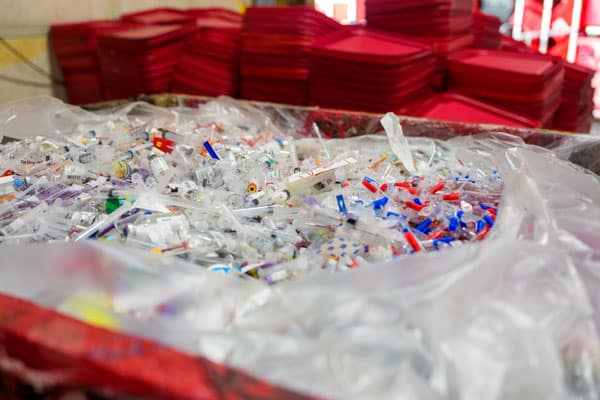
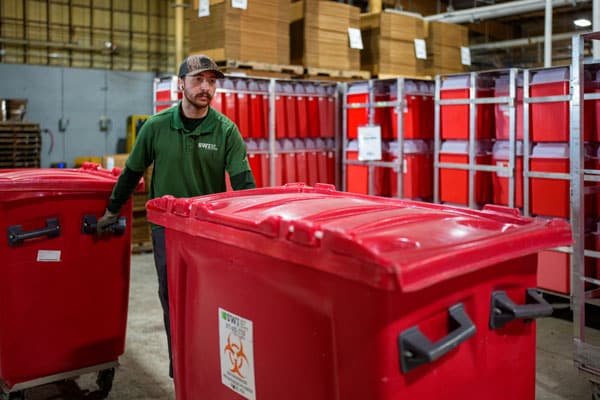
- Medical waste disposal: Regulated medical waste is collected and treated with high heat at SWI’s own facility.
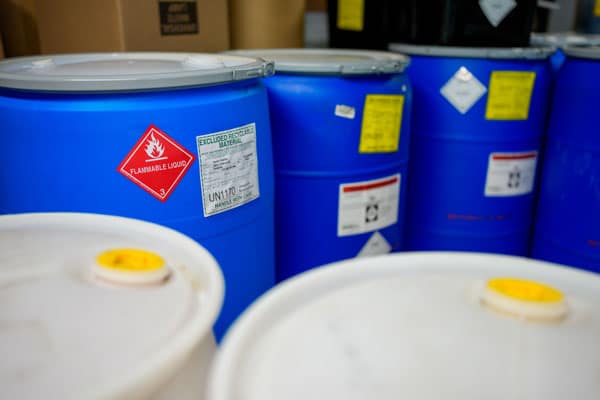
- Container coding: SWI recommends red containers for medical waste, yellow for chemotherapy waste, black for hazardous waste, and blue for pharmaceutical waste. Chemotherapy waste is also treated with high heat, and OSHA recommends changing all containers when they’re ¾ full.
- Hazardous waste disposal: Waste that is toxic, ignitable, corrosive, or reactive is safely transported for proper disposal. Learn more about hazardous waste disposal in Kentucky.
- Sharps disposal: Scheduled pickup of used needles and other sharps.
- Sharps mail-back: A mail-back program for needles and sharps only, available nationwide and well suited to remote areas, acupuncture clinics, and tattoo parlors.
Request a Document Shredding Quote in Covington
Ready to set up medical document shredding for your Covington healthcare facility? Call Specific Waste Industries at (877) 425-2770 or request a quote online. Live operators are available Monday through Friday, 8 a.m. to 5 p.m. EST, and our team will build a program around your record volume and compliance needs.
Frequently Asked Questions
Cost depends on your record volume and how often you need pickups. SWI offers competitive, transparent pricing with no hidden fees, and your price isn’t tied to distance. For an exact figure based on your facility, request a quote.
SWI’s document shredding in Covington is a pickup service for healthcare facilities, so your staff never has to carry patient files across town. For personal papers, the City of Covington holds an annual shred and e-waste event for residents, small businesses, schools, churches, and nonprofits. The 2026 event took place June 20 at Holmes High School, and details for the next one are posted on the city’s website.
Our program is designed to support your HIPAA obligations at every stage. Records go into locked consoles and move under a documented chain of custody. Once shredded, they can’t be read or reconstructed, and you receive a certificate of destruction after each service.
When a vendor handles PHI for a covered entity, a BAA is generally part of that relationship. HIPAA allows covered entities to hire a business associate for disposal. Bring up your BAA requirements when you request a quote, and our team will walk through them with you.
Kentucky hospitals keep medical records for five years from discharge. For minors, records are kept until three years after the patient reaches the age of majority. Other provider types should confirm their own requirements before scheduling a purge.
Many facilities keep certificates of destruction for at least six years, which matches HIPAA’s retention period for compliance documentation. Some keep them longer when state or payer rules require it. Filing them with your other HIPAA compliance records makes them easy to pull during an audit.
Ask our team during program setup, and we’ll explain how to prepare your records before each pickup.
Shredding consoles are for paper records only. Labeled specimen containers, IV bags with patient labels, medication blister packs, and other non-paper items that contain patient information must go through SWI’s medical or pharmaceutical waste services.
Yes. Many facilities use SWI for document shredding along with medical waste and sharps disposal. Working with one regional partner means fewer vendors and a single team that knows your facility.