



Sharps disposal in Covington, KY, usually comes down to small, unplanned moments. A family practice in Latonia gives flu shots all morning, the exam room sharps container reaches its fill line before lunch, and someone has to decide whether to leave the full container in the supply closet until the next pickup.
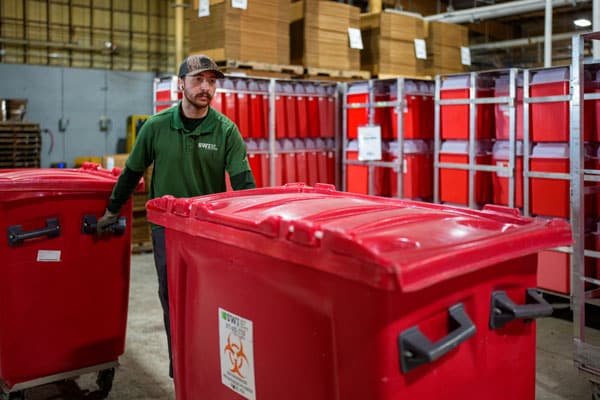
Specific Waste Industries (SWI) has spent more than 45 years helping healthcare facilities get those calls right. As a regionally owned and operated medical waste company, we provide sharps pickup for clinics, dental offices, med spas, tattoo studios, and other facilities across Northern Kentucky. The service is built around your facility. SWI evaluates your sharps disposal needs, collects containers on your chosen pickup schedule, and treats sharps with high heat at our facility. If you’d like to see what that looks like for your site, you can request a quote at any time.
Sharps Disposal Services for Covington Facilities
A dialysis center and a two-chair tattoo studio both produce sharps, but at very different volumes. SWI builds each program around how much a facility generates and how often it needs service, so a busy clinic and a single-provider office each end up with a schedule that fits.
Scheduled Sharps Pickup
Most Covington facilities set up recurring service. SWI collects your sharps containers at the frequency your facility picks, whether that’s weekly or quarterly. Recurring sharps pickup is a natural fit for urgent care clinics, dental offices, dialysis centers, and labs, where needles and lancets are part of every shift. Facilities that also generate red-bag waste can combine both streams with medical waste disposal in Covington.
One-Time Sharps Pickup
Some sharps don’t fit a schedule. Office closures, moves, and renovations tend to turn up full containers, and every so often a clinic finds old ones tucked away in storage. A one-time sharps pickup clears them out without starting a recurring program.
Sharps Mail-Back for Low-Volume Generators
For facilities that fill a container only every few months, sharps mail-back is often the better fit. The program is for sharps only and is available nationwide, making it well suited to remote locations, acupuncture clinics, and tattoo parlors. In Northern Kentucky, that might be a solo acupuncturist in Mainstrasse Village or a mobile phlebotomy service that works from a vehicle. Practitioners who mainly use acupuncture needles can find more detail on our acupuncture needle disposal page.
High-Heat Treatment for Collected Sharps
Once sharps are collected, we treat them with high heat at SWI’s facility, rendering them noninfectious before final disposal. Handling the treatment step ourselves is a big part of what lets us offer competitive pricing.
What Counts as Sharps Waste
The bloodborne pathogens standard defines contaminated sharps as any contaminated object that can penetrate the skin. That covers more than needles, and the items below all belong in a sharps container.
- Needles and syringes: Hypodermic needles, syringes with needles attached, and IV catheters.
- Lancets and pen needles: Blood glucose lancets, insulin pen needles, and needles from glucagon-like peptide-1 (GLP-1) and other injectable pens.
- Blades: Scalpel blades, suture needles, and razor blades used in procedures.
- Tattoo and body art needles: Tattoo needles, piercing needles, and microblading tools.
- Acupuncture needles: Filiform needles used in acupuncture and dry needling.
- Contaminated glass: Broken blood tubes, capillary tubes, slides, and pipettes.
- Dental sharps: Anesthetic needles, endodontic files, and wires.
- Unused or expired needles and syringes: Supplies that turn up during inventory checks, moves, or closures.
Sharps That Need a Different Container
SWI recommends a four-color system for coding containers. Red for medical waste and sharps, yellow for chemotherapy waste, blue for pharmaceutical waste, and black for hazardous waste. Most sharps go in red, with two exceptions: sharps used in chemotherapy, and syringes that still contain medication.
Sharps used to give chemotherapy drugs go in a yellow chemotherapy container and are treated with high heat along with other chemotherapy waste. A syringe that still holds medication may count as pharmaceutical waste, which is transported for proper disposal through our pharmaceutical waste disposal services. If the drug is a controlled substance, Drug Enforcement Administration (DEA) rules apply as well.
Sharps Rules That Apply in Covington
Kentucky’s Energy and Environment Cabinet notes that no one agency has jurisdiction over medical waste in the state, and sharps are no exception. Workplace safety rules govern containers and needlestick prevention, state licensing rules cover hospitals, clinics, and tattoo studios, and federal transport rules apply once sharps leave the building. Here’s where each piece fits for a Covington facility.
Kentucky OSH and the Bloodborne Pathogens Standard
Kentucky runs its own state plan approved by the Occupational Safety and Health Administration (OSHA). Known as Kentucky Occupational Safety and Health (Kentucky OSH), it covers private employers along with state and local government workplaces, and it enforces the bloodborne pathogens standard (29 CFR 1910.1030) in Covington.
Under that standard, sharps containers must be closable, puncture-resistant, leakproof on the sides and bottom, and labeled or color-coded. They stay upright while in use, are replaced routinely before they overfill, and are closed right before they’re moved. Contaminated needles can’t be bent, recapped, or removed unless the employer shows that no alternative is feasible, and shearing or breaking them is prohibited outright. SWI offers OSHA compliance training to help staff handle sharps correctly.
Needlestick Prevention and Recordkeeping
The Centers for Disease Control and Prevention (CDC) estimates that hospital-based healthcare personnel experience about 385,000 needlestick and other sharps injuries each year. The Needlestick Safety and Prevention Act added three requirements to the bloodborne pathogens standard, all focused on device selection and recordkeeping.
- Annual plan review: The written exposure control plan must be reviewed at least once a year and must document the safer medical devices the employer considered and used.
- Frontline input: Employers must ask non-managerial staff who provide direct patient care for input when choosing safer devices.
- Sharps injury log: Employers required to keep OSHA injury and illness records must also keep a sharps injury log.
Kentucky Rules for Health Facilities
Kentucky’s Cabinet for Health and Family Services licenses hospitals, nursing facilities, ambulatory surgical centers, and several types of clinics under the 902 KAR 20 series. According to the Energy and Environment Cabinet’s regulatory overview, these facilities must keep sharps separate from other waste and have them treated before final disposal.
The hospital rule, 902 KAR 20:016, gets more specific. Sharps go into puncture-resistant containers immediately after use, and contaminated needles can’t be bent or broken by hand. Proper treatment is also crucial for disposal, since most Kentucky landfills won’t accept untreated medical waste.
Kentucky Rules for Tattoo and Body Art Studios
Tattoo studios have their own regulation, 902 KAR 45:065. It requires tattoo needles to be used once and discarded, and it requires sharps containers that are rigid, puncture-proof, leakproof on the sides and bottom, and kept within the artist’s easy reach. On disposal, the language is direct: contaminated sharps “shall be disposed of by using a licensed medical waste disposal company.”
Covington studios must hold a certificate from the Northern Kentucky Health Department, which also handles inspections. The state’s own regulatory overview lists 902 KAR 45:065 alongside the hospital and nursing facility rules, putting a tattoo shop in Mainstrasse in the same compliance category as a clinic down the street.
Transport and Hauling Requirements
Federal Department of Transportation (DOT) rules take over once sharps leave your facility. In transport, regulated medical waste, including sharps, is a Division 6.2 hazardous material (UN3291) with packaging, marking, and shipping paper requirements under 49 CFR 173.134. Kentucky adds a county-level layer as well, requiring medical waste haulers to register with and report annually to each county where they work under 401 KAR 49:080. Under these conditions, it’s fair to ask any vendor serving Kenton County whether it’s registered.
Keeping Sharps Containers Compliant Between Pickups
The National Institute for Occupational Safety and Health (NIOSH) reports that as many as one-third of sharps injuries happen during disposal. Most of those incidents happen in the seconds after a procedure, meaning the way a container is set up impacts the safety and compliance of your staff.
Where to Place Sharps Containers
Place a container within arm’s reach of where sharps are used, so no one has to walk across a room holding an uncapped needle. Weill Cornell Medicine’s environmental health and safety office, citing NIOSH guidance, recommends mounting containers 52 to 56 inches high at a standing workstation and 38 to 42 inches high at a seated one. At those heights, staff can see both the opening and the fill line. In pediatric areas and waiting rooms, place or lock containers out of reach of patients and visitors.
The ¾ Fill Line
OSHA recommends changing sharps containers when they’re ¾ full, and CDC’s NIOSH guidance warns that filling past the fill line raises the risk of needlestick injuries. Close the lid before moving a container and keep it upright. If a busy exam or injection room keeps hitting the line early, that’s a pickup frequency conversation to have with SWI.
Common Sharps Mistakes
A handful of mistakes recur in busy practices, and each one is easy to correct once staff knows what to look for.
- Recapping needles: Recapping is restricted under the bloodborne pathogens standard. Drop the whole needle and syringe into the container.
- Sharps in red bags: Loose sharps can puncture a bag, so they belong in a rigid sharps container.
- Pushing sharps down to make room: Close the container and swap in a new one once it reaches the fill line.
- Pen needles in the trash: A used pen needle is easy to toss like a cap or wrapper, but it’s still sharps waste and goes in the sharps container.
- Full containers left in hallways: Store closed containers upright in a spot staff can reach and the public can’t until pickup.
How Sharps Pickup Works in Covington
Getting started with SWI takes a short conversation about what your facility generates. After that, every pickup follows the same five steps:
- Program review: SWI reviews the sharps your facility produces and how many containers you fill in a typical month.
- Pickup frequency: You decide how often SWI collects.
- Collection: Trained SWI staff collect sealed sharps containers at your facility at the chosen frequency.
- Transport: Sharps travel in DOT-compliant vehicles to SWI’s treatment facility.
- Treatment and records: SWI treats sharps with high heat, and your facility receives paperwork for its compliance files.
Choosing a Pickup Frequency
SWI offers daily, weekly, bi-weekly, monthly, bi-monthly, quarterly, annual, and one-time sharps pickup. A dialysis center or hospital unit may need service daily or weekly, while a dental office or small tattoo studio may fill a container monthly or quarterly. Your frequency can change with volume, which helps during flu shot season or when a practice adds providers.
Why Practices Work With Specific Waste Industries
Covington practices have several sharps vendors to choose from, and most promise pickup and compliance. The differences show up in the details, such as who handles treatment and how well a program fits a small office.
More Than 45 Years of Sharps and Medical Waste Experience
SWI has worked with sharps, medical, chemotherapy, pathological, pharmaceutical, and hazardous waste for more than 45 years, along with the OSHA, U.S. Environmental Protection Agency (EPA), DOT, and Kentucky rules that apply to each. Keeping your facility compliant is our primary goal, and our OSHA compliance training helps the staff who handle sharps every day stay current.
Competitive Pricing With No Hidden Fees
Because SWI treats sharps at our own facility, we can keep pricing competitive. Your quote reflects your waste type, volume, and pickup frequency, and invoices are straightforward with no hidden fees or surprise charges.
Programs Sized to Your Volume
As a regionally owned and operated company, we build each program around the facility it serves, from large-volume generators to a single-provider office. National programs often run on fixed templates that leave little room to adjust when a facility’s needs change.
Covington Facilities That Generate Sharps
Covington’s care settings range from the St. Elizabeth Covington campus to independent practices, studios, and clinics across Kenton County. SWI provides sharps disposal for the following facility types:
- hospitals and outpatient centers
- physician and specialty practices
- urgent care clinics
- dental and oral surgery offices
- dialysis centers
- laboratories and blood draw sites
- nursing homes and assisted living facilities
- home health and hospice agencies
- pharmacies that give vaccines
- med spas and weight-loss clinics
- veterinary clinics
- tattoo and piercing studios
- acupuncture clinics
- funeral homes
Serving Covington and Northern Kentucky
SWI provides sharps pickup throughout Covington, including ZIP codes 41011, 41014, and 41015. That covers downtown Covington, Mainstrasse Village, Latonia, Wallace Woods, Peaselburg, Licking Riverside, and South Covington.
Elsewhere in Kenton County, we serve Ludlow (41016), Fort Mitchell, Lakeside Park, and Edgewood (41017), Erlanger (41018), Fort Wright, Park Hills, Taylor Mill, and Independence. Our Northern Kentucky coverage also reaches Newport, Bellevue, Dayton, and Fort Thomas in Campbell County and Florence in Boone County. For nearby areas, see sharps disposal in Florence, Boone County sharps disposal, Cincinnati sharps disposal, and sharps disposal in Kentucky.
Other Waste Services From SWI
Facilities that set up sharps pickup often need a compliant route for other waste streams as well. SWI also provides the following services in Covington:
- Medical waste disposal: Collection and high-heat treatment of red-bag waste through medical waste disposal in Covington.
- Pharmaceutical waste disposal: Expired and unused medications are transported for proper disposal through our pharmaceutical waste disposal services.
- Hazardous waste disposal: Waste that’s toxic, ignitable, corrosive, or reactive is transported for proper disposal, including universal waste such as batteries and mercury-containing fluorescent lamps, mercury waste, and inorganic waste such as acids and bases. Learn more about hazardous waste disposal in Kentucky.
- Medical document shredding: Secure shredding for medical documents through medical document shredding in Covington.
- OSHA compliance training: OSHA compliance training that prepares staff to handle sharps and other regulated waste correctly.
Request a Sharps Disposal Quote in Covington
Your quote is built on the sharps your facility actually produces and the pickup frequency you need. Call Specific Waste Industries at (877) 425-2770 or request a quote online, and our team will recommend a program that keeps your facility compliant. Live operators are available Monday through Friday, 8 a.m. to 5 p.m. EST.
Frequently Asked Questions
Pricing depends on your waste type, volume, and pickup frequency. SWI treats sharps at our own facility, which helps us keep pricing competitive, and invoices are straightforward with no hidden fees. For an exact figure based on what your facility generates, request a quote and our team will build a program around your volume.
Base your schedule on how quickly containers reach the ¾ line. A dialysis center or hospital unit may need weekly or even daily service, while a dental office might fill a container once a month. Facilities that fill one only every few months are often better served by our sharps mail-back program.
OSHA recommends replacing a sharps container when it’s ¾ full. The bloodborne pathogens standard also requires routine replacement and prohibits overfilling. Close the lid before moving a full container, keep it upright, and store it out of public reach until pickup.
No. Loose sharps should never go directly into a red bag because they can puncture it and injure whoever handles the bag next. Place them in a rigid, puncture-resistant sharps container first. Once the container is full and closed, SWI collects it at your next scheduled pickup.
Yes. Pen needles can puncture skin, so they go in a sharps container like any other needle. Injection clinics, med spas, and weight-loss practices that give GLP-1 or insulin injections should factor pen needles into pickup frequency, since a full day of injections can add up quickly.
Yes. Kentucky’s tattooing regulation, 902 KAR 45:065, requires contaminated sharps to be disposed of by a licensed medical waste disposal company, and the local health department inspects studios. In Covington, that’s the Northern Kentucky Health Department. Low-volume studios can use sharps mail-back, while busier shops often prefer scheduled pickup.
If your facility must keep OSHA injury and illness records, the bloodborne pathogens standard also requires a sharps injury log. Smaller employers exempt from those records don’t have to keep one, though tracking sharps injuries can still inform the annual exposure control plan review. SWI’s OSHA compliance training covers both.
Containers can be purchased through us or through another vendor, but they are not provided free of charge. SWI recommends the following color code for containers: Red for medical waste, yellow for chemotherapy waste, blue for non-hazardous pharmaceutical waste, and black for hazardous waste. For sharps and medical waste containers, OSHA recommends changing them when they’re ¾ full.
Your facility receives paperwork after each pickup showing exactly when sharps left your facility and how they were treated. You’ll be asked for this paperwork during an inspection or audit, so file it with your other compliance records, such as your exposure control plan.
Yes. SWI also provides Cincinnati sharps disposal, so practice groups with offices on both sides of the Ohio River can use one provider for sharps on both sides.