



Need a dependable way to manage full sharps containers in Dayton, Ohio? Specific Waste Industries delivers professional sharps disposal programs for healthcare facilities and other organizations that generate used needles and related puncture hazards. We coordinate recurring or one-time collection, offer a mail-back option for needles and sharps, and support compliance needs throughout the process. Call (877) 425-2770 to discuss your facility’s requirements or request a quote.
Professional Sharps Disposal in Dayton, Ohio
Professional sharps disposal is built around safe point-of-use handling, dependable collection, and a service plan that reflects each facility’s waste profile.
A safer way to manage used needles and other sharps
Because sharps can puncture or cut skin, a reliable program must work at the point of use and fit daily workflows to avoid injury. Specific Waste Industries (SWI) coordinates collection on the cadence you select, transports sharps through its regulated program, and manages treatment using the appropriate approved method. The service supports medical and dental practices, veterinary clinics, laboratories, outpatient facilities, pharmacies, and other professional generators with similar waste profiles.
Your sharps program can operate on its own or integrate with broader medical waste services in Dayton. Medical and dental offices in Dayton and Montgomery County must contract with licensed transporters for infectious-waste removal and treatment, while household sharps follow separate local instructions.
When a professional disposal program makes sense
A managed sharps program is typically appropriate when containers reach the fill line regularly, multiple locations need a uniform process, sharps are generated alongside other regulated medical waste, or a facility requires documented collection and help matching container types to specific workstations.
What Counts as Sharps Waste?
A clear definition helps staff separate sharps from other medical-waste streams and route each material through the appropriate program.
Common sharps generated by professional facilities
The U.S. Food and Drug Administration (FDA) defines sharps as objects with sharp points or edges that can puncture or cut skin. Examples include needles, syringes, lancets, auto-injectors, infusion sets, and connection needles. Professional facilities may also generate scalpel blades, blood-collection devices, surgical needles, and other contaminated items capable of causing a puncture injury.
For unusual items, confirm acceptance with SWI before placing them into the sharps stream, so the load remains compliant and safe to handle.
Keep other waste streams in the right program
Sharps are one part of a broader medical-waste plan, and other streams may require separate handling. SWI uses the following color-coding system to help facilities keep materials in the proper program.
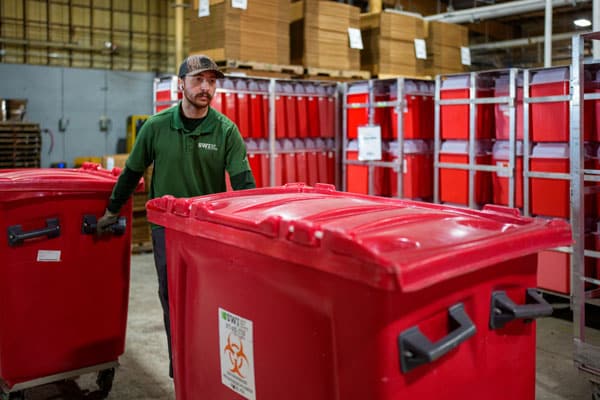
- Red: Medical waste.
- Yellow: Chemotherapy waste, treated with high heat.
- Blue: Pharmaceutical waste.
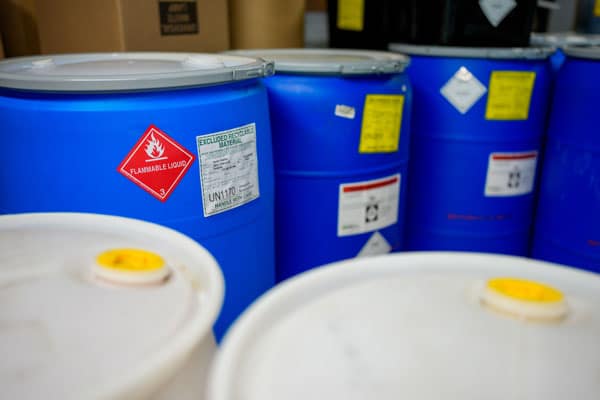
- Black: Hazardous waste. Any waste that is toxic, ignitable, corrosive, or reactive and must be transported and managed under separate requirements.
SWI can coordinate multiple streams under a unified plan. The sharps mail-back option is limited to needles and sharps only and is not intended for other regulated waste.
How Specific Waste Industries Handles Sharps Disposal
SWI manages the service from container placement through collection, transportation, and treatment, with the facility’s workflow guiding the program.
Containers assessment for safest use
SWI helps facilities assess container size, placement, stability, ease of access, and likely fill rate so containers work at the point of use without disrupting care.
The Occupational Safety and Health Administration (OSHA) requires sharps containers to be closable. OSHA does not mandate a single universal opening size or design, so selection should reflect the largest sharps used at the workstation and the hazards identified during a site-specific assessment.
Collection, transportation, and treatment
Staff places used sharps into the designated container and closes it according to the manufacturer’s instructions and facility policies. SWI then coordinates collection, transports the waste through its regulated program, and manages treatment using the appropriate approved process.
The Ohio Environmental Protection Agency (EPA) regulates infectious-waste generation and treatment under Chapter 3734 of the Ohio Revised Code. The Public Utilities Commission of Ohio (PUCO) regulates transportation of infectious waste. Ohio EPA identifies applied heat encapsulation as an approved treatment technology for sharps. The appropriate requirements and treatment route depend on the waste type, the generator’s status, and site conditions.
Sharps Container Safety and Compliance
Container selection, placement, and fill-level practices are central to protecting staff and maintaining a repeatable disposal process. SWI helps facilities address these practical requirements without overstating what a general service page can determine for every site.
Replace containers before they’re overfilled
FDA guidance notes that sharps containers should include a mark indicating when they’re approximately 3/4 full. If no mark is shown, OSHA still recommends changing sharps containers when they’re 3/4 full. Treat the fill line as an action point and avoid packing material beyond that capacity to reduce risk to staff and transporters. Facilities should close and seal containers, following the manufacturer’s instructions, internal procedures, vendor guidance, and any applicable local requirements. Full containers should never be reopened, emptied, or manually cleaned.
Use the right container for the workstation
A suitable container is closable, puncture-resistant, leak-resistant, stable, and within the user’s immediate reach. The opening should allow disposal without fully removing the lid during routine use. OSHA emphasizes choosing a design that matches the hazards and the sharps used at each workstation.
Ohio requirements depend on the facility and waste volume
Ohio EPA states that businesses generating more than 50 pounds of infectious waste in a calendar month must register with Ohio EPA and, among other obligations, ensure the waste is treated before ultimate disposal. The same 50-pound monthly threshold is used when describing a Large Quantity Generator (LQG) in Montgomery County.
That threshold doesn’t define every duty for every Dayton facility. Obligations can vary by waste stream, generation volume, facility type, permits, and other circumstances. Review your site-specific requirements before changing a disposal process.
Compliance support for Dayton facilities
SWI helps customers evaluate container workflows, service frequency, documentation needs, and broader compliance considerations, including OSHA-related training and tools. See the medical-waste compliance resources at our compliance page or call (877) 425-2770 to discuss your program.
Pickup Options for Dayton-Area Facilities
Facilities generate sharps at different rates, so SWI offers pickup frequencies that match each location’s waste profile and operating requirements.
Scheduled sharps pickup
Recurring service suits facilities that generate sharps consistently. Choose a cadence that matches your waste volume and operating needs, be it daily, weekly, biweekly, monthly, bimonthly, quarterly, or annually. Plans are set by the facility’s waste profile and service requirements and don’t include a promise of a specific pickup day or time.
One-time sharps pickup
One-time service can address accumulated sharps, a vendor transition, a consolidation, or a single collection event. During the quote process, share the waste type, container status, approximate volume, service locations, and any access details that may affect safe pickup.
Mail-Back Sharps Disposal for Needles and Sharps
Mail-back services give certain professional generators an alternative way to manage needles and sharps when recurring route service isn’t the best fit. The option remains limited to sharps and should be confirmed against the facility’s needs before selection.
When mail-back service may be a practical fit
Mail-back is useful when route service isn’t the best option, including for remote locations, acupuncture practices, tattoo parlors, satellite operations, and organizations with nationwide service needs. SWI’s published mail-back solution includes a sharps container, prepaid return-mailing materials, a manifest, and tracking documentation. Review coverage and current details at our sharps mail-back page before selecting it.
Mail-back is for needles and sharps only. It’s not designed for pharmaceutical, chemotherapy, pathological, hazardous, or other regulated waste streams.
What to confirm before selecting mail-back
Confirm accepted sharps, container specifications, shipment instructions, coverage area, documentation, and program limitations with SWI. Staff should close and seal containers around the marked 3/4-full line, consistent with FDA guidance.
Why Dayton Facilities Choose Specific Waste Industries
Facilities choose Specific Waste Industries for experienced guidance, personalized regional service, in-house treatment, and clear pricing that supports practical waste-management decisions.
More than 45 years of medical-waste experience
With 45+ years in the industry, SWI understands point-of-use container placement, appropriate fill levels, service cadence, documentation, and how sharps programs coordinate with other regulated waste streams.
Regionally owned and operated
As a regionally owned and operated provider, SWI shapes programs around each facility’s waste profile and operating needs rather than a rigid national template. Customers get direct support from a team that knows local requirements and healthcare workflows in the Midwest and South.
In-house treatment and transparent pricing
SWI treats its own waste rather than sending it to a third-party treatment facility. That structure supports competitive pricing, straightforward invoicing, and no hidden fees.
How to Start Sharps Disposal Service in Dayton
Starting service begins with a clear understanding of the facility’s waste profile, the locations involved, and the collection approach that best fits daily operations.
- Request a quote or call (877) 425-2770. Share the sharps types, approximate volume, number of service locations, current container status, and whether you need recurring or one-time service.
- Compare scheduled pickup with mail-back for needles and sharps. Customers choose a service frequency, not a particular pickup day or time.
- Put the program into place. Specific Waste Industries coordinates collection and supports your facility’s disposal workflow.
Frequently Asked Questions
Service may include containers, collection, transportation through SWI’s regulated program, treatment, and compliance support, subject to the facility’s waste profile and SWI’s acceptance requirements.
Containers can be purchased through SWI or through another vendor, but they’re not supplied free of charge. SWI helps facilities determine appropriate sizes and locations for safe, efficient container use.
Options include daily, weekly, biweekly, monthly, bimonthly, quarterly, annually, or as a one-time pickup. Frequency is based on the facility’s waste generation and operating needs.
Close and seal the container at the marked fill line, following manufacturer instructions and facility procedures. Don’t open, empty, or manually clean a full container.
Yes. Mail-back is available for needles and sharps only. It can work well for remote areas, acupuncture practices, tattoo parlors, and organizations with nationwide service needs. Confirm current coverage and program requirements with SWI.
Pricing depends on the facility’s waste profile, volume, service type, and frequency. SWI provides transparent pricing, straightforward invoicing, and no hidden fees. Request a quote for facility-specific pricing.
This page is intended for professional generators. Household users should follow City of Dayton and Montgomery County residential guidance.
Yes. SWI manages RMW, hazardous waste, and shredding services.
Ready to put a sharps program in place for your Dayton facility? Request a quote or call (877) 425-2770.