

Key Takeaways
- Hazardous waste starts with a classification question: is the material a waste, and does it appear on a hazardous waste list or carry toxic, ignitable, corrosive, or reactive properties?
- Healthcare facilities, laboratories, pharmacies, dental offices, veterinary clinics, hospitals, and regulated businesses need a documented process for identification, separation, labeling, storage, and transportation.
- Hazardous waste can overlap with medical waste, pharmaceutical waste, universal waste, or non-hazardous regulated waste, so each stream needs the right container and disposal route.
- Specific Waste Industries helps facilities build practical programs with container support, documentation assistance, transparent pricing, and pickup frequencies selected around facility needs.
Hazardous waste can create real risks for people, property, and the environment. A facility does not need to generate much of it for the rules to matter. A partially used chemical, a mercury-containing device, or an expired pharmaceutical can pose a serious problem. But what is hazardous waste, exactly?
The United States Environmental Protection Agency (EPA) describes hazardous waste as waste with properties that make it dangerous, or materials capable of having a harmful effect on human health or the environment. Hazardous waste must be carefully transported and disposed of, and many regulations exist to keep all parties safe, from the initial generation of the waste to the final treatment.
What Qualifies as Hazardous Waste
A material usually has to be considered a waste before it can be classified as hazardous waste. Under the Resource Conservation and Recovery Act, solid waste is a broad category that includes liquids, semi-solids, sludges, and contained gases. When a facility generates hazardous waste, it must check it against the EPA’s listings that outline the material’s use, composition, concentration, and state requirements.
Listed Hazardous Waste
Listed hazardous wastes appear on specific regulatory lists. These can be broken down into:
- The F-list, which includes non-specific source wastes, such as certain spent solvents.
- The K-list, which covers source-specific industrial wastes.
- The P-list and U-list, which apply to certain unused commercial chemical products when they are discarded, including some pharmaceuticals and laboratory chemicals.
Before moving a material into a general waste stream, you need to verify how it’s classified. That determines how it can be transported and eventually disposed of.
Characteristic Hazardous Waste
A waste can also qualify as hazardous if it is toxic, ignitable, corrosive, or reactive. These are wastes that can burn, corrode, react dangerously, or harm people and the environment if they are mishandled.
| Hazardous Waste Characteristic | What It Means | Examples |
| Ignitable | The waste can catch fire under certain conditions. | Contaminated gasoline and diesel, certain solvent wastes, aerosol cans, plus some oxidizers. |
| Corrosive | The waste can corrode materials, or it has a very low (or very high) pH. | Acids, bases, and some aqueous wastes from laboratory or facility operations. |
| Reactive | The waste can react dangerously with air, water, pressure, heat, or other materials. | Organic peroxides, water-reactive materials, pyrophoric waste, and compressed gas cylinders. |
| Toxic | The waste can harm people or the environment if mismanaged. | Mercury-containing devices, aqueous waste with heavy metals, hazardous pharmaceutical waste, and mercury-contaminated debris. |
Waste That Needs Special Handling
Some types of waste require structured handling, even if they fall under the general “hazardous waste” category. While items like mercury-containing fluorescent lamps, batteries, and consumer electronics may be managed under streamlined rules, they still need proper collection and transportation. Pharmaceutical waste also requires extra care, because while one medication may not be hazardous, another in the same container could be. Hazardous waste is subject to a wide variety of regulations because, without proper care, it can easily cause serious harm to people and the environment.
Common Examples of Hazardous Waste in Healthcare and Business Settings
Regulated facilities should evaluate waste by the material, the process that generated it, and any applicable rules. Hazardous waste covers a wide range of different materials, and each requires special care and handling to ensure safe storage, transportation, and disposal.
| Waste Stream | What Fits Under the Category |
| Universal waste | Mercury-containing fluorescent lamps; batteries, including lithium-ion, lithium metal, lead-acid, nickel-cadmium, nickel-metal hydride, alkaline, and button batteries; and consumer electronics, including computers, keyboards, monitors, cell phones, and circuit boards. |
| Pharmaceutical waste | Non-hazardous pharmaceutical waste, hazardous pharmaceutical waste, and controlled substances. |
| Inorganic waste | Acids, bases, aqueous waste with heavy metals, and oxidizers. |
| Mercury waste | Thermostats, thermometers, mercury switches, mercury-contaminated debris, COD vials, and elemental mercury. |
| Other waste | Contaminated gasoline and diesel, aerosol cans, organic peroxides, water-reactive and pyrophoric waste, and compressed gas cylinders. |
| Non-hazardous regulated waste | Antifreeze, used oil, oily water, non-PCB ballasts, PCB ballasts that are non-TSCA regulated, non-hazardous oil and absorbents, RCRA empty drums, and industrial non-hazardous and special waste. |
When you need a service partner, our team at Specific Waste Industries can provide hazardous waste disposal services to handle identification, segregation, documentation, and transportation.
Hazardous Waste, Medical Waste, and Pharmaceutical Waste Are Different Categories
Regulated waste terms often get mixed up. That can lead to poor waste segregation, incorrect containers, and incomplete records. While the different categories may seem similar, they do have some critical differences.
| Waste Category | What It Means | Examples | Disposal Note |
| Hazardous waste | Waste that has toxic, ignitable, corrosive, or reactive properties. | Acids, bases, oxidizers, mercury waste, organic peroxides, water-reactive waste, and compressed gas cylinders. | It should be segregated, labeled, documented, and transported in accordance with industry regulations. |
| Medical waste | Waste generated in healthcare settings that may contain blood, bodily fluids, sharps, or other regulated medical materials. | Red bag waste, contaminated items, pathological waste, and sharps. | This must be treated according to regulatory requirements. |
| Pharmaceutical waste | Waste medications or drug-related materials that may be non-hazardous, hazardous, or controlled. | Expired medications, unused pharmaceuticals, hazardous pharmaceuticals, and controlled substances. | This must be separated by the waste’s classification and handled under the applicable rules. |
| Universal waste | Common regulated materials managed under streamlined requirements. | Mercury-containing fluorescent lamps, batteries, and consumer electronics. | This requires proper collection, storage, and transportation. |
| Non-hazardous regulated waste | Waste that may not meet hazardous waste criteria but still should be reviewed before disposal. | Antifreeze, used oil, oily water, non-PCB ballasts, and RCRA empty drums. | Facility rules and state requirements may still apply; verify before disposal. |
The overlap is common in healthcare settings. Certain medications may require pharmaceutical waste disposal, while controlled substances need a separate controlled substance disposal process. The correct disposal method depends heavily on the specific waste in question.
How to Tell if a Waste Stream May Be Hazardous
To determine whether a waste stream is hazardous, you need to establish several in-house processes to identify which materials meet the criteria. These must be simple enough for daily use and careful enough for compliance review. Start with the material’s status. If it is simply unwanted, expired, contaminated, spilled, or no longer intended for use, it may be a waste.
Next, check whether the waste appears on a hazardous waste list. Certain materials, like commercial chemicals or solvents, may fall into a specifically listed category. If you’re unsure, evaluate the characteristics and determine if the waste is toxic, ignitable, corrosive, or reactive. You can use safety data sheets, process knowledge, pH readings, testing, and other documentation to determine its status.
However, if the waste contains mercury, heavy metals, oxidizers, or hazardous pharmaceuticals, immediately set it aside for hazardous waste disposal. These can all cause serious harm if they enter the general waste stream. You can always reach out to a qualified waste provider in your area to determine the right way forward.
How to Dispose of Hazardous Waste Safely
Safe disposal of hazardous waste begins long before pickup. A facility should identify and classify the waste, use and label compatible containers, maintain documentation, and schedule compliant transportation to ensure that the waste safely reaches an appropriate destination.
Generators are responsible for determining whether their waste is hazardous and for documenting that hazardous waste is identified, managed, and handled properly before recycling or disposal. Then, a transporter moves the waste to a secure facility, where it’s then treated or disposed of accordingly.
Hazardous waste disposal is described as a cradle-to-grave system. There are clear lines that move the waste from the initial generator (the “cradle” phase) all the way to transportation and disposal (the “grave” phase). Every phase requires clear documentation and many safety measures to ensure that all parties stay compliant with both state and federal regulations.
Use the Right Containers and Labels
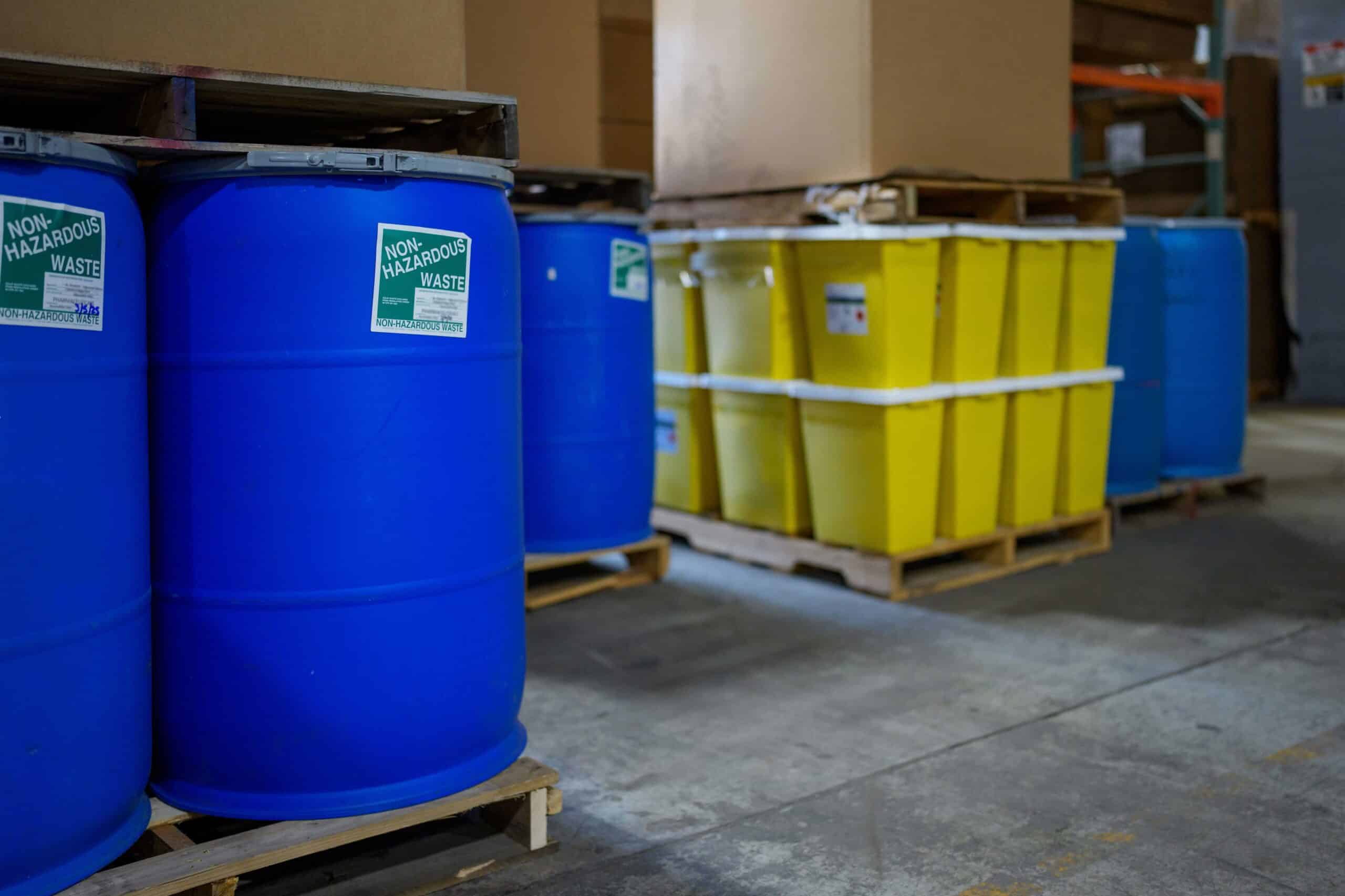
Containers should be compatible with the waste, closable, leak-resistant, and in good condition. However, they should also remain closed at any time when waste is not being added. Each container must have the correct label that dictates what’s inside, and any outdated containers or labels must be removed immediately. If the container has a fill line, ensure that it is never filled past this marker.
Store Waste Safely Before Pickup
Hazardous waste should be kept in a designated area protected from routine traffic, heat, sparks, and incompatible materials. Incompatible wastes should be separated, as the wrong mix can generate heat, toxic gases, pressure, or other unsafe reactions. For higher-risk materials or liquids, you may need secondary containment measures, such as locked doors or increased security.
Arrange Compliant Pickup and Transportation
Hazardous waste must be transported safely and securely, and that’s where a reliable partner comes into play. A partner like us can provide containers, documentation support, and pickup frequencies tailored to your facility’s specific needs. That flexibility matters, because while a smaller office may have a small but steady stream of hazardous waste, a larger laboratory may require more frequent and larger pickups.
What Not to Do With Hazardous Waste
When disposing of hazardous waste, safety is absolutely essential, and disposing of these materials using sinks, drains, commodes, or other sewage disposal channels is strictly prohibited. You must never:
- Pour materials down drains
- Place materials in the regular trash
- Mix materials with incompatible materials
- Store materials in food containers
- Leave materials open
- Strip labels from materials
- Allow materials to accumulate without a plan
If a container has an unknown material, a missing label, a damaged lid, visible residue, or signs of pressure buildup, keep it secured and get a qualified review before moving it.
How Specific Waste Industries Helps Facilities Stay Compliant
As a regionally owned and operated medical waste management company, we’ve worked with facilities of every kind. From healthcare facilities and laboratories to veterinary clinics and dental offices, we have more than 45 years of experience in the disposal of all kinds of waste. With our experience, we provide transparent pricing, straightforward invoicing, and no hidden fees, because we know how to make the waste disposal process safer and more straightforward.
If your facility needs help classifying a waste stream, we can help. Contact our team today, and let’s create a plan that keeps your facility safe, compliant, and reliable.