




Regulated medical waste is not something your facility can afford to mismanage. From sharps and chemotherapy materials to pharmaceutical residues and pathological waste, every stream your operation generates carries compliance obligations, and the penalties for falling short are severe. Specific Waste Industries (SWI) has served healthcare providers, veterinary clinics, and specialty practices across Kentucky for more than 45 years, delivering fully documented, compliant medical waste disposal that protects your staff, your patients, and your organization.
Shelbyville-area facilities work within a layered regulatory framework. The EPA sets baseline classification and handling rules. OSHA’s bloodborne pathogens standard governs sharps and biohazardous materials in the workplace. The DOT regulates packaging, labeling, and transport on public roads. The Kentucky Energy and Environment Cabinet enforces state-specific generator requirements covering permitting, tracking, and disposal. SWI’s service model is built around all of it, so your team can focus on patient care while SWI manages compliance from container delivery through final treatment.
Medical Waste Removal Services in Shelbyville, KY
SWI provides a complete range of regulated medical waste removal services tailored to the waste streams generated by your Shelbyville facility. Every step, from container delivery to scheduled pickup, transportation, and in-house treatment, stays under SWI’s direct control. No third-party handoffs. No gaps in documentation. Just a clear, accountable chain of custody from your door to final disposition.
Pathological Waste Disposal
Surgeries, autopsies, and medical examinations generate human tissues, organs, body parts, and related biological materials that require strict handling and a fully documented chain of custody. Health facilities depend on licensed, compliant disposal to meet both federal and Kentucky-specific requirements.
SWI collects pathological materials in red containers supplied directly to your facility, transports them using DOT-compliant personnel, and treats the waste with high heat at SWI’s own in-house treatment facility. Because the entire process stays within SWI’s control, documentation is complete at every stage, and your recordkeeping is always inspection-ready.
Chemotherapy Waste Disposal
Even trace residues on gloves, gowns, IV bags, or tubing can pose serious risks to staff and the public. Any Shelbyville practice that administers or manages chemotherapy agents must comply with EPA hazardous waste requirements and OSHA guidance for cytotoxic materials, and the margin for error is narrow.
Yellow containers are designated for chemotherapy waste, providing immediate visual identification and preventing cross-contamination with other streams. SWI provides these containers and calibrates pickup frequency to your actual generation rate, whether that means weekly, biweekly, monthly, or another schedule that fits your practice. All chemotherapy waste is treated with high heat at SWI’s in-house facility. Pricing is transparent, and your quoted rate is what you’re invoiced, with absolutely no hidden fees or extra line items for chemotherapy materials.
Pharmaceutical Waste Removal
Expired medications, unused controlled substances, and pharmaceutical residues fall under RCRA and DEA rules for controlled substances. Flushing or landfilling pharmaceuticals can incur regulatory penalties, and the compliance landscape has tightened considerably in recent years for facilities of all sizes.
SWI’s pharmaceutical waste services support medical offices, long-term care providers, and veterinary practices throughout Shelby County. Blue containers are assigned for pharmaceutical waste and supplied directly to your facility. Pickup frequency is set to your volume, and transparent pricing means pharmaceutical waste removal fits predictably into your operating budget with no hidden fees.
Sharps Disposal
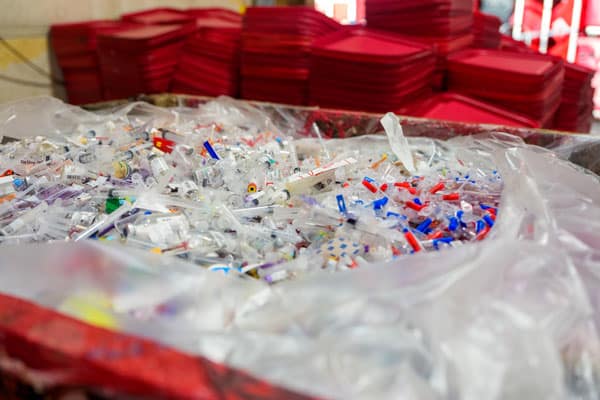
Needles, syringes, lancets, scalpels, and similar devices are among the most commonly regulated medical wastes across healthcare, veterinary, tattoo, and acupuncture settings. OSHA’s bloodborne pathogens standard requires strict handling and disposal of all sharps. The risks of needlestick injuries and bloodborne pathogen exposure make reliable sharps management non-negotiable for any facility that generates them.
OSHA recommends changing sharps containers when they reach 3/4 full. Overfilling increases the risk of injury during closure and removal. SWI calibrates service schedules to help your team stay ahead of that threshold and adjusts frequency as your waste volume changes.
For facilities in remote parts of Shelby County and for lower-volume generators such as acupuncture clinics and tattoo parlors, SWI offers a mail-back program for sharps. Designed specifically for needles and other sharps, the program provides full tracking and is available nationwide. This is a practical, compliant option for operations that don’t require routine on-site pickup.
When on-site pickup is the right fit, SWI supplies red containers for sharps and establishes a pickup cadence that mirrors your generation rate. Larger facilities may need daily service, whereas smaller practices may be well served by bimonthly or quarterly visits. SWI will assess your volume and recommend a schedule that keeps your operation compliant.
Why Shelbyville Facilities Choose Specific Waste Industries
The right medical waste partner does more than show up on schedule. Regulatory knowledge, consistent service quality, and genuine accountability are what sets SWI apart for facilities across Shelby County. More than four decades in regulated waste management means mature procedures, trained personnel, and practical answers to unusual waste challenges. As regulations evolve, SWI keeps clients prepared.
All decisions are made by people who live and work in the region, understand Kentucky’s rules, and invest in long-term client relationships. Shelby County facilities aren’t merely ticket numbers; they’re also neighbors. That proximity translates to faster response times and a level of accountability a distant national vendor cannot match.
Regulated medical waste is treated with high heat at SWI’s own facility. Custody runs from pickup through final treatment without third-party handoffs, documentation gaps, or uncertainty about where your waste goes. Compliance records are clear and complete.
Quotes are straightforward and align with the services delivered. No surprise surcharges, no unexplained add-ons will appear on your invoice. Combined with SWI’s in-house treatment, this transparency supports competitive, predictable pricing.
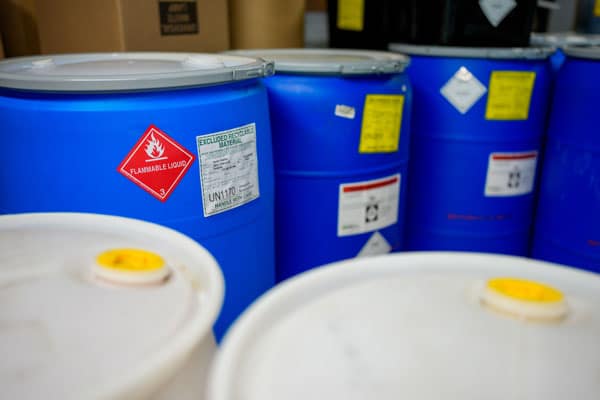
Color-coded containers are provided to every client. SWI supplies all containers your facility needs and keeps segregation simple:
- Yellow: chemotherapy waste
- Red: regulated medical waste
- Black: hazardous waste
- Blue: pharmaceutical waste
Clear color-coding reduces the risk of cross-contamination and simplifies onboarding for new staff from day one.
Waste generation varies widely. SWI offers daily, weekly, biweekly, monthly, bimonthly, quarterly, annually, and one-time pickups, each matched to your actual volume so you’re never over- or under-serviced.
Complete Waste Disposal Solutions for Shelbyville Healthcare Facilities
Beyond core medical waste removal, SWI provides additional services that complete a full compliance program for Shelbyville-area providers.
Hazardous Waste Management
Facilities that generate hazardous chemical waste need precise handling and transportation. SWI collects hazardous waste in black containers and transports it in accordance with EPA, DOT, and Kentucky Energy and Environment Cabinet (EEC) regulations. Accepted categories include:
- Universal waste: Batteries (lithium-ion, lithium metal, lead-acid, nickel-cadmium, nickel-metal hydride, alkaline, and button batteries); consumer electronics (computers, keyboards, monitors, cell phones, and circuit boards)
- Pharmaceutical waste: Non-hazardous, hazardous, and controlled substances
- Inorganic waste: Acids, bases, aqueous waste with heavy metals, and oxidizers
- Mercury waste: Mercury-containing fluorescent lamps, thermostats, thermometers, mercury switches, mercury-contaminated debris, COD vials, and elemental mercury
- Other waste: Contaminated gasoline and diesel, aerosol cans, organic peroxides, water-reactive and pyrophoric waste, and compressed gas cylinders
- Non-hazardous waste: Antifreeze, used oil, oily water, non-PCB ballasts, PCB ballasts that are non-TSCA regulated, non-hazardous oil and absorbents, RCRA empty drums, and industrial non-hazardous and special waste
Medical Document Shredding
Healthcare operations generate large volumes of sensitive patient records, billing documentation, and protected health information that must be destroyed in compliance with HIPAA and applicable privacy rules. SWI provides secure shredding for medical documents only, keeping the program focused and compliant.
Together, these services give Shelbyville facilities a single, accountable partner for the full spectrum of regulated waste, from generation through treatment, transportation, and secure destruction.
Ready to simplify compliance for your facility? Contact Specific Waste Industries today to request a customized quote and learn how SWI’s regional expertise and transparent pricing can benefit your Shelbyville operation.
Frequently Asked Questions
SWI supports hospitals, physician practices, veterinary clinics, dental offices, long-term care facilities, tattoo parlors, acupuncture practices, and other organizations that generate regulated waste. If your operation produces medical, pharmaceutical, chemotherapy, sharps, or hazardous waste, SWI has a compliant program to manage it.
SWI aligns operations with requirements from the EPA, OSHA, DOT, and the Kentucky EEC. Container specifications, segregation procedures, transportation documentation, and in-house medical waste treatment, in which waste is treated at high temperatures, are all designed to meet or exceed applicable standards. With 45+ years of experience, SWI brings deep familiarity with both federal and Kentucky-specific rules, so your facility receives compliant handling at every step.
The mail-back program is a sharps-only solution for lower-volume generators that don’t need scheduled on-site pickup. It’s well suited to facilities in remote areas of Shelby County and to acupuncture and tattoo practices. The program provides full tracking, convenient return shipping, and nationwide availability, keeping disposal compliant without requiring a recurring service schedule.
No. SWI provides clear quotes and invoices without hidden fees, surprise surcharges, or unexplained additions. Pricing transparency is a core operating standard.
Pickup frequency is set to your actual generation volume. Options include daily, weekly, biweekly, monthly, bimonthly, quarterly, annually, and one-time pickups. SWI will assess your needs, recommend a schedule, and adjust it if your volume changes.
SWI supplies all required color-coded containers to support correct segregation. Yellow containers are for chemotherapy waste, red containers for regulated medical waste, black containers for hazardous waste, and blue containers for pharmaceutical waste. Using the correct container from the start improves safety and helps maintain compliance across your entire operation.