



Bourbon distilleries and healthcare practices both call Bardstown home, and so do a growing number of manufacturers. Each one produces hazardous waste that cannot go out with the regular trash. Federal and Kentucky state regulations apply the moment a material is toxic, ignitable, corrosive, or reactive, and getting rid of that material the wrong way can expose a business to fines and liability that were entirely avoidable.
Facilities across the Midwest and South have relied on Specific Waste Industries for more than 45 years, and Bardstown and the rest of Nelson County now get that same depth of experience. Our team manages waste identification and transport, then carries disposal through to completion in line with the Kentucky Energy and Environment Cabinet, the Environmental Protection Agency (EPA), the Occupational Safety and Health Administration (OSHA), and the Department of Transportation (DOT). Pricing also stays transparent and competitive throughout, with no hidden fees.
How We Manage Your Hazardous Waste in Bardstown
Navigating hazardous waste compliance in Kentucky involves a strict four-step process, which our team manages entirely to keep your facility fully compliant.
Step 1: Identify the Waste Type and Generator Status
Everything starts with figuring out what your facility generates and how it is classified. A Very Small Quantity Generator produces up to 220 pounds of hazardous waste a month, or up to 2.2 pounds of acutely hazardous waste. Between 220 and 2,205 pounds a month puts a facility in the Small Quantity Generator category, whereas anything above 2,205 pounds qualifies as a Large Quantity Generator. Your generator status determines which rules apply, and that analysis is something our team handles for you.
Step 2: Obtain an EPA ID Number
Before hazardous waste can legally leave your site, Small and Large Quantity Generators need an EPA identification number. We walk Bardstown facilities through this step so waste is never sitting around longer than it needs to.
Step 3: Comply with Kentucky’s Regulations
The Kentucky Energy and Environment Cabinet runs the state’s hazardous waste program under the federal Resource Conservation and Recovery Act (RCRA), and Kentucky layers its own reporting rules on top of the federal ones. An annual hazardous waste report is required of generators, and manifests need to stay on file for a minimum of three years. Keeping track of all this falls to our team, not yours.
Step 4: Transportation and Disposal
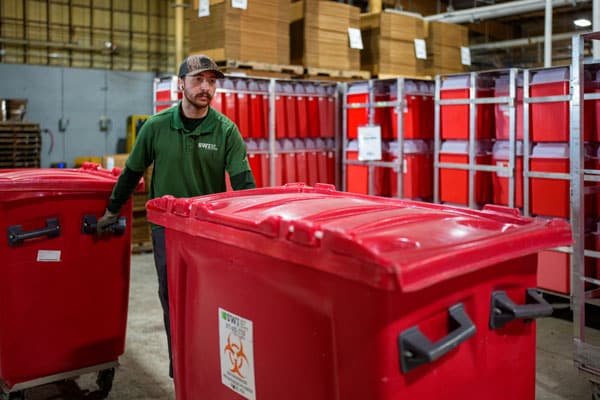
Once your waste is identified and packaged, it gets documented on a hazardous waste manifest and transported in DOT-compliant containers for disposal under federal and state law. Hazardous waste is transported by trained specialists, not handled casually, and every load is tracked from pickup through final disposal.
Types of Hazardous Waste We Manage
A wide range of waste streams fall under our management for Bardstown businesses. Below are the categories we handle most often.
Universal Waste
- Mercury-containing fluorescent lamps
- Batteries, including lithium-ion, lithium metal, lead-acid, nickel-cadmium, nickel-metal hydride, alkaline, and button batteries
- Consumer electronics, including computers, keyboards, monitors, cell phones, and circuit boards
Pharmaceutical Waste
- Non-hazardous pharmaceutical waste
- Hazardous pharmaceutical waste
- Controlled substances
Inorganic Waste
- Acids
- Bases
- Aqueous waste with heavy metals
- Oxidizers
Mercury Waste
- Thermostats, thermometers, and mercury switches
- Mercury-contaminated debris
- COD vials
- Elemental mercury
Other Regulated Waste
- Contaminated gasoline and diesel
- Aerosol cans
- Organic peroxides
- Water-reactive and pyrophoric waste
- Compressed gas cylinders
- Antifreeze, used oil, and oily water
- Non-PCB and PCB ballasts (non-TSCA regulated)
- RCRA empty drums and industrial non-hazardous or special waste
Hazardous Waste Rules for Bardstown and Nelson County Businesses
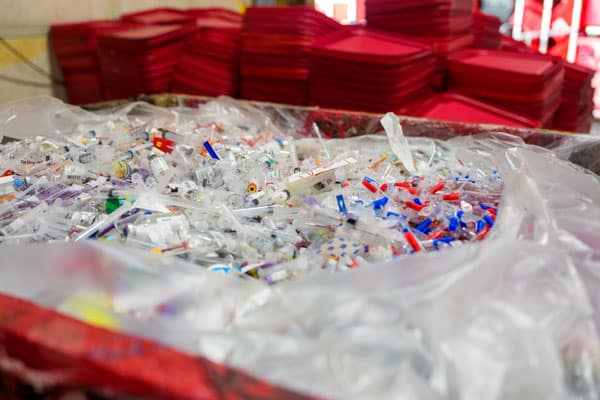
The City of Bardstown’s curbside collection program will not take hazardous materials. Syringes, used needles, vials, and petroleum products cannot go in a residential or commercial waste container, and neither can paint, poisons, acids, explosives, caustics, Compliance, or batteries, which means Bardstown and Nelson County businesses need a separate, licensed path for anything hazardous. Standard trash service was never built to handle it. A licensed partner handles identification, packaging, manifesting, and transport in line with Kentucky Energy and Environment Cabinet and EPA requirements, and that is what keeps a facility out of the fines and liability that come with getting it wrong.
Industries We Serve in Bardstown
Hazardous waste shows up differently depending on the kind of facility generating it. Here is where we spend most of our time in Bardstown and Nelson County:
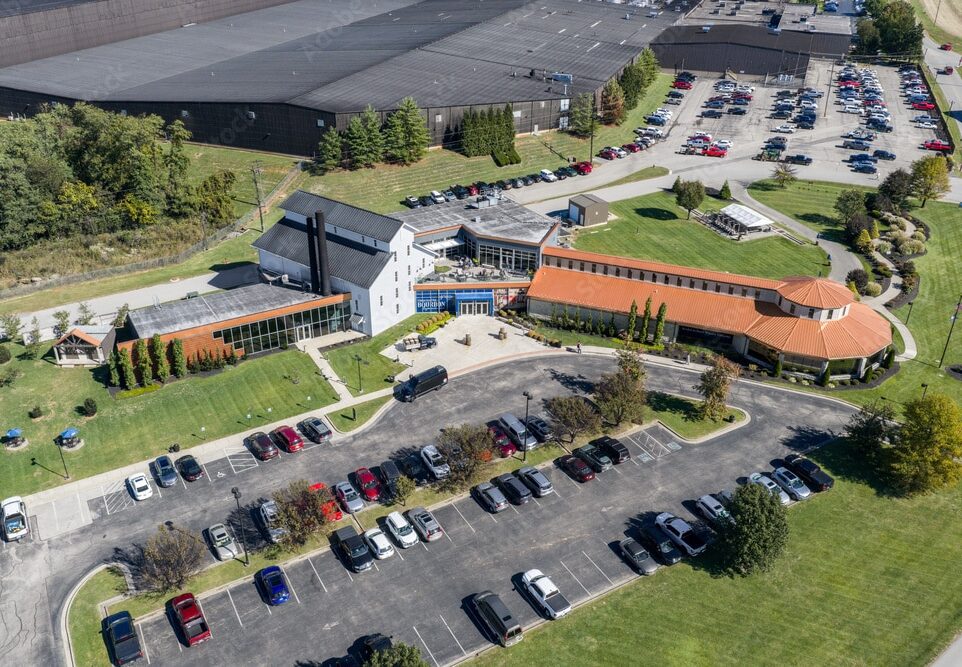
- Bourbon distilleries, which generate spent chemicals, lab waste, and maintenance fluids as part of production
- Hospitals, nursing homes, and rehabilitation facilities
- Dental practices and veterinary clinics
- Laboratories and diagnostic facilities
- Manufacturing and industrial operations
Why Bardstown Businesses Choose Specific Waste Industries
Choosing the right environmental partner means balancing strict regulatory compliance with fair, predictable costs, and that is exactly what we deliver.
45 Years of Compliance Expertise
More than 45 years in this industry means our team has handled almost every waste stream there is, and that depth keeps your facility compliant with OSHA, EPA, DOT, and Kentucky state regulations. Compliance sits at the center of what we do, and every program we build is meant to keep your facility out of the fines and liability that come with mishandled hazardous waste.
Transparent, Regional Pricing
Handling much of this within our own network, rather than paying a third party to do it, is what lets us keep pricing competitive and transparent. Invoicing is straightforward, with no hidden fees anywhere on the bill. As a regionally owned and operated partner, we tailor each program to what a facility actually generates, and you pick the pickup frequency, whether that is weekly, monthly, quarterly, or something else entirely. Request a quote and we’ll build a hazardous waste program around what your facility generates.
Frequently Asked Questions
Small Quantity Generators and Large Quantity Generators need an EPA identification number before hazardous waste can be transported off-site. Determining your facility’s generator status is something our team can do, and from there we can walk you through getting an EPA ID if you do not already have one.
Pickup frequency is built around what your facility actually generates. Daily, weekly, bi-weekly, monthly, bi-monthly, quarterly, annual, and one-time service are all available.
Fines and legal liability can follow improper hazardous waste disposal under both federal and Kentucky state law. A licensed hazardous waste partner keeps your waste identified and transported correctly, with disposal handled according to EPA and Kentucky Energy and Environment Cabinet requirements.
Yes. Beyond Bardstown, businesses throughout Nelson County and the surrounding Kentucky region fall within our broader Midwest and South service area.